
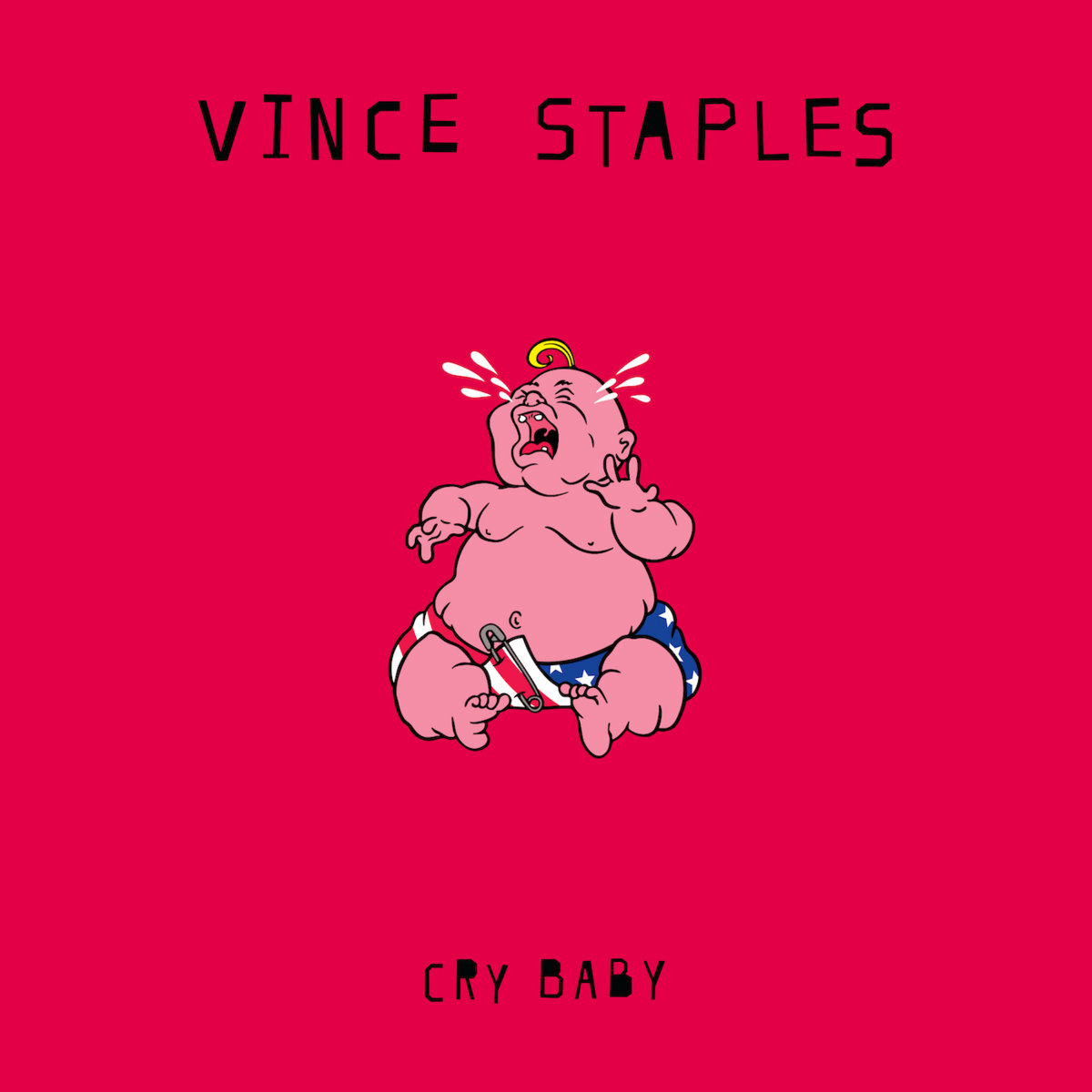




Vince Staples
Cry Baby
LOMA VISTA/SECTION EIGHT
Moving from Def Jam to his own label as he does with Cry Baby is Vince Staples’ big fish—albeit in a smaller, more manageable pond—theory made real, made menacing, and given a sweltering soundtrack. His storytelling’s snidely comic anecdotes and asides, his lyrically intimate way with up-close violence (if Vince was a weapon, he’d be a shiv) and sepia-toned neighborhood politics—together with his warm, forever mid-fi production skills—never truly fit mainstream hip-hop’s three-M sound (misogyny, murder, money), no matter how much blood got spilled or how much he appeared on television.
Nor did Staples ever come across as a total innocent without blame. Out here on his own, he’s purely his own boss, yet no longer a loner. On his seventh album, he spends more time looking outward than inward, peering into a communal politic with more rock to his roll than ever before. By tuning and turning up the gruff guitars, Staples sounds more aggrieved than out-and-out angry as he questions the things that keep us happily narcotized, whether it’s cash (“Cotton”), the media (“TV Guide”), religion (the terror-domed “Do You Know the Devil”), or the broader battle cry of closing track “7 in the Morning.”
Like “Run Jesse Run”–era Reverend Jackson, Stapes has the smarts to re-tell (and wryly re-try) decades of Black socioculturalism and hurt on a winning anthem such as “Go! Go! Gorilla” before turning its fickle flashlight on the fragility of childhood, likely his own. That’s how he completely succeeds on Cry Baby in a way that he hasn’t in the past: Rather than staying insular and pointing outwardly, sarcastically, Staples works his way from the outside in, from history to his own story.
