
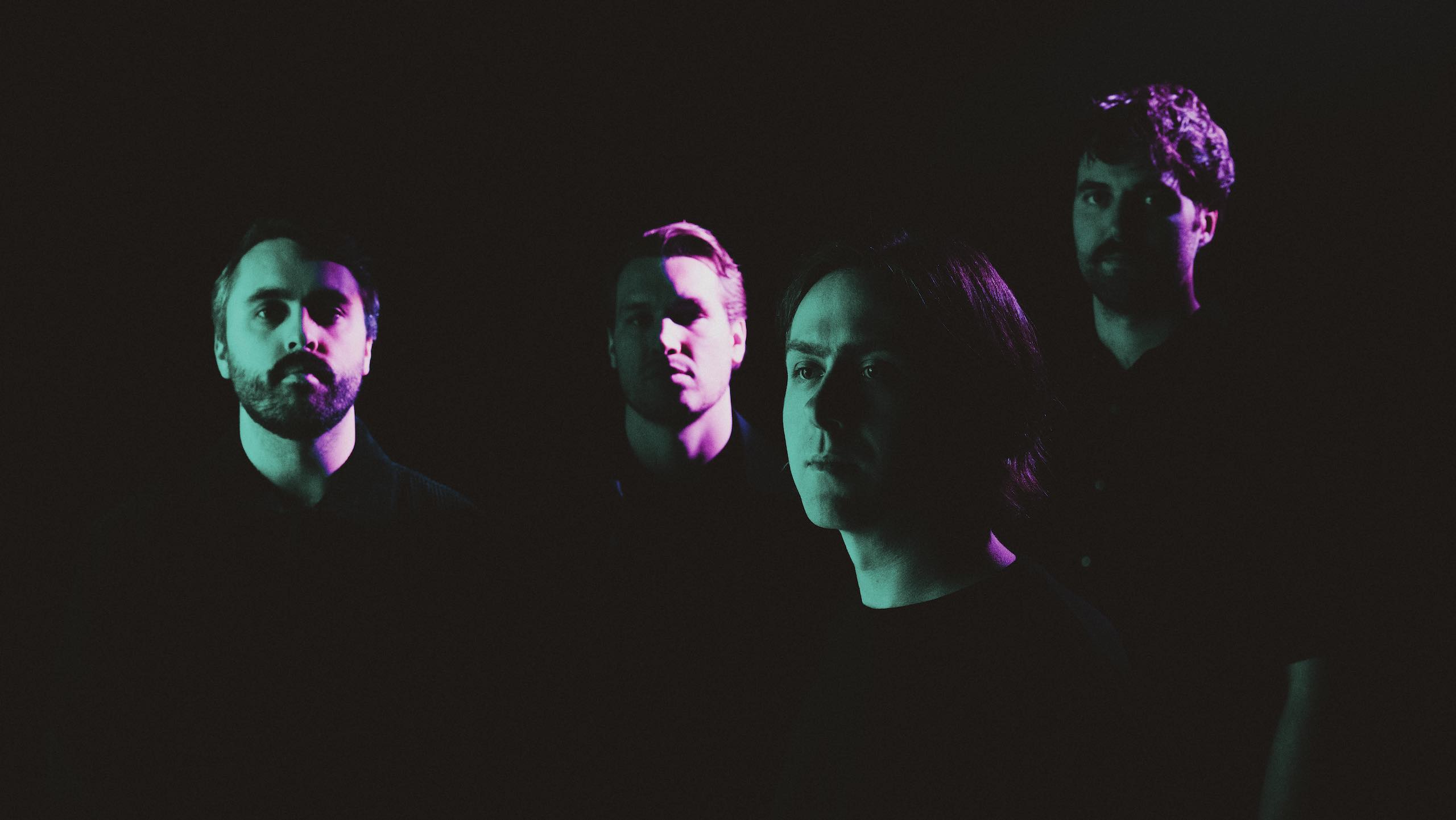
In the three years since releasing their sophomore effort Eternal Embers, Vancouver’s Meltt have undergone plenty of existentializing, grieving, and looking toward the future—and even more experimenting with synth patches. The resulting Pathways is a dreamy journey through various worlds largely colored by the synthetic sounds the quartet managed to achieve with new gear acquisitions and the ever-inspiring reference points of Radiohead and Mac DeMarco. It feels like early-era Tame Impala—perhaps what we might have imagined a Kevin Parker dance album to sound like prior to the reality of Deadbeat.
The past few years also seem to have been full of plenty of reading. Among the authors cited or referenced in Meltt’s track-by-track breakdown of Pathways are Leo Tolstoy, Albert Camus, Cormac McCarthy, Joseph Campbell, and Paul Bowles—a list of heady literary influences that manage to comfortably share space with the pop song structures of Dua Lipa and Sabrina Carpenter. All of which serves to fuel these 13 neo-psych odysseys examining our purpose on this Earth and the universe beyond it at a moment when such answers feel particularly pressing. “Pathways is about four men leaving their twenties and figuring out their paths and lives,” the band’s Ian Winkler explained. “There are moments of optimism and hope, but we also let some darkness in this time.”
With the album out today via Nettwerk, you can stream along and find all four members of Meltt’s breakdown of the LP below. You can also stream Pathways here.
1. “One Life”
Chris Smith: “One Life” is about figuring out what is the best way to live your life, questioning your path, pondering, “What do I bring?” “What is my purpose?” It’s about noticing time fly past you while you think about this, a bit of anxiety around it, finding an intermittent sense of peace that what you’re doing is a good and worthwhile thing, as you feel art is at the very least an output that can bring yourself and others to a sense of peace, belonging, pleasure, understanding, and purpose—unlike most any other way you can spend your life.
This one was a very unfleshed-out Ableton project I had from a while back that was basically just a loop of the two synths and hip-hop-style drum pattern you hear through the verse sections (arpeggio synth and chords). When it came to assess what ideas we had in the can, I was called to try and see if I could turn it into something more and ended up adding some vocals and also a new chorus section which made it feel much more like a song, albeit somewhat of an odd one. From there, James added some beautiful color with synths and guitars which really finished it off!
2. “Up All Night”
Smith: This one’s about growing up, getting to be older, noticing your perspective warp with age, processing death, holding memories of the people lost closely with you forever going forward, despite the darker moments remaining optimistic about the future, basking in the act of having fun while you still can, being somewhat careless knowing that life only happens once. The demo came together super fast, all in one sporadic solo home session. I recently got a new laptop and was playing around with sounds on a plugin that I hadn’t been able to use before on my previous laptop. It was actually a very inspiring moment not having a bogged down machine limit the creative flow. I came upon the reverby and bright synth sound and stumbled onto the lead melody, and the rest of the layers—synth chords, synth bass, acoustic guitar, and vocal melodies—flowed out very quickly afterward. Only later did I reflect on the scrap/temp words in the original demo and craft the rest of the lyrics from there.
3. “Hesitate”
Jamie Turner: When I’d first drafted this, it was about the struggle to figure out the path of your life and what the future holds, but coming to accept and enjoy the journey. It’s about listening to your heart, realizing and embracing that some things are out of your control and trying not to overthink everything. It’s about stepping back from our worries so we can enjoy the journey and the various paths we follow and opportunities we have in life to the fullest.
Smith: The demo started with playing around on a TASCAM cassette recorder. I wanted to try an experiment with Varispeed where I’d play something super high-pitched and fast, record it to tape, and then slow it down for the sonic character and aesthetic it would bring from the technique and recording medium. I started playing those chords on a high-pitch Nashville tuning guitar for the test, but then I started jiving how it was sounding as it was and never bothered to slow it down.
4. “By Your Side”
James Porter: this song is about getting older and looking back with nostalgia about “the good ol’ times” of our late high school and early twenties West Coast summers. It’s ultimately about friendship and the idea that those moments that felt so natural and easy messing around in nature with our friends become more and more important as they get further away.
Smith: Initial inspiration for the music came from a plugin pack for Ableton called “Inspired by Nature.” The intro glitchy chords came from a granular synth sound in that, and the song was formed around this self-producing layer.
5. “I Love You”
Ian Winkler: To me, this one’s about the constant struggle to maintain optimism for the future and affirm a love for life and the Earth in an age where we’re constantly being exposed to all the horrifying things happening across the world. It started as a pretty standard guitar-led rock song and I ended up reworking it after Chris said something about making it synthier. Things clicked when I got the verse bass line, and the rest fell in after that. At the time I was interested in pop song structures, as well, and ended up being inspired by chart-toppers like Sabrina Carpenter and Dua Lipa.
6. “Another Elegy”
Winkler: A song about dealing with grief in the long term. A lot of my writing on Eternal Embers happened right around the time of my dad’s death, when my emotions were at their most intense, and this song is about being able to process it and continue life while carrying the constant weight of that grief. Inspired by Camus’ The Myth of Sisyphus.
Porter: This song started with this fingerpicking pattern and just kept layering more and more guitars really quickly into a really long loop/jam. Chris then took it and added the choruses and we worked on layering it up as a band.
7. “Goodbye”
Porter: “Goodbye” started when I was messing around with a new synth I’d just got (a Prophet Rev2, for the gear nerds). I was using this plugin that allowed me to trigger synth chords with my guitar, which was really inspiring. For a long time it was this really chill, low-key electronic song with some acoustic elements. Chris and I went to see a Caribou show and then I tried to channel some of that live show into the song which made it much more colourful and energetic. Lyrically, most songs we write have a pretty strong element of hope, but this one came from a place of pretty severe anxiety that felt hard to get out of at the time. This song is about sitting with those feelings and using the imagery of black holes, dimming suns, and life ending on Earth to convey how those things can feel.
8. “In Your Arms”
Winkler: A song for my wife. Inspired by road trips together, as well as making the final decision to propose while on tour. It started with a demo; I loved the verses, but spent a long time trying to improve the chorus. After many attempts, I ended up using a chorus I’d written for a folk song from another project and layered in more synths. The filtered and pitched guitar stuff that transitions in and out of the outro was also pinched from a demo of James’ that didn’t make the album.
9. “The Huntsman”
Winkler: This song tries to imagine what it’d be like to confront death with perfect clarity—not with courage or fear, but with anger. It’s inspired by the ideas of gnosticism: that our universe was created by an ill-meaning or ignorant god that has trapped our spirits in a physical realm. The title is derived from the last paragraph of Cormac McCarthy's Suttree and is also inspired by Tolstoy’s The Death of Ivan Illych and Bowles’ The Sheltering Sky.
Porter: This song started as a slow chord progression where I was playing that really distorted guitar line over. It was a lot more low key overall, then we added the drums and different instrumentation and became bigger and bigger. Eventually we got to the point of tracking Jamie’s drums and we decided to go double-time speed at the end to let the energy explode. We kept egging Jamie on to try bigger and bigger fills to the point where we were all laughing. We kept that insane one at the end.
10. “Monomyth”
Porter: Chris started this demo and I was immediately drawn to the chords and melodies, which felt really inspiring. We all layered the song up together in our home studios, eventually finding our way to the big build and release that happens in the song. To me (especially in that synth building and the EBow slide-guitar release moment), the song felt like it had a sort of mythical or magical vibe of overcoming something profound and being transformed. I channeled that idea into the lyrics, which are all about the hero’s journey of transformation.
Smith: Musically, the song came from the simple idea of playing acoustic guitar on top of a recently acquired CR-78 drum machine. I wanted to try and evoke the soft and intimate musical styling of recent Mac DeMarco recordings, and ended up with what would become “Monomyth” after much more band development from the original work.
11. “Never Let Go”
Smith: This one’s about navigating life, making difficult decisions, trying to figure out what the greater picture is and how it should inform you in your day-to-day, ultimately accepting that you don’t have full control and never will, but to remain present and alert to the world as much as you can. This song was born out of Radiohead synth inspiration. I was watching a live video of them playing “Everything in Its Right Place” and there was this beautiful and mysterious intro where Thom played a Prophet 8 that had this beautiful-sounding patch that was super squishy, juicy, and wiggly. I tried to make a similar patch on my synth, since I loved it so much, and saved it as a new preset. Later, on a totally different day, I was noodling around and starting playing the ascending chord progression that became the verses of the song. I added the bass, general drum pattern, and vocals to form most of what the verse is. Months and months later in a room session, we all developed the chorus and climax section together.
12. “If You’re Lonely”
Porter: “If You’re Lonely” started when I was housesitting at my partner’s parent’s house. They have a beautiful grand piano in their living room, and when my partner went out to work I started playing around. The verse chords and the initial lyric (“If You’re lonely, sing it slowly”) came at the same time. After we worked on it as a band for a while it just felt like it could keep building and building, so we found this really bombastic vibe of a continuously growing sonic wave that seemed to fit the emotions of the song. Lyrically, it’s about loneliness, heartbreak, despair, and—ultimately—hope.
13: “In Good Time”
Porter: “In Good Time” is the oldest song on the album and was started right as we were finishing up our last album, Eternal Embers. At the time, I wanted to experiment making something that was as opposite of the typical Meltt sonic palette as possible. That meant in the demo phase no electric guitars at all, no reverb on vocals, drum machine instead of real drums, playing instruments purposefully softer than other songs. It was an inspiring experiment to work within some limitations, and it forced me to think a little differently. The lyrics are really simple and about patience and the power that being with another person we trust has on calming our anxieties.
