
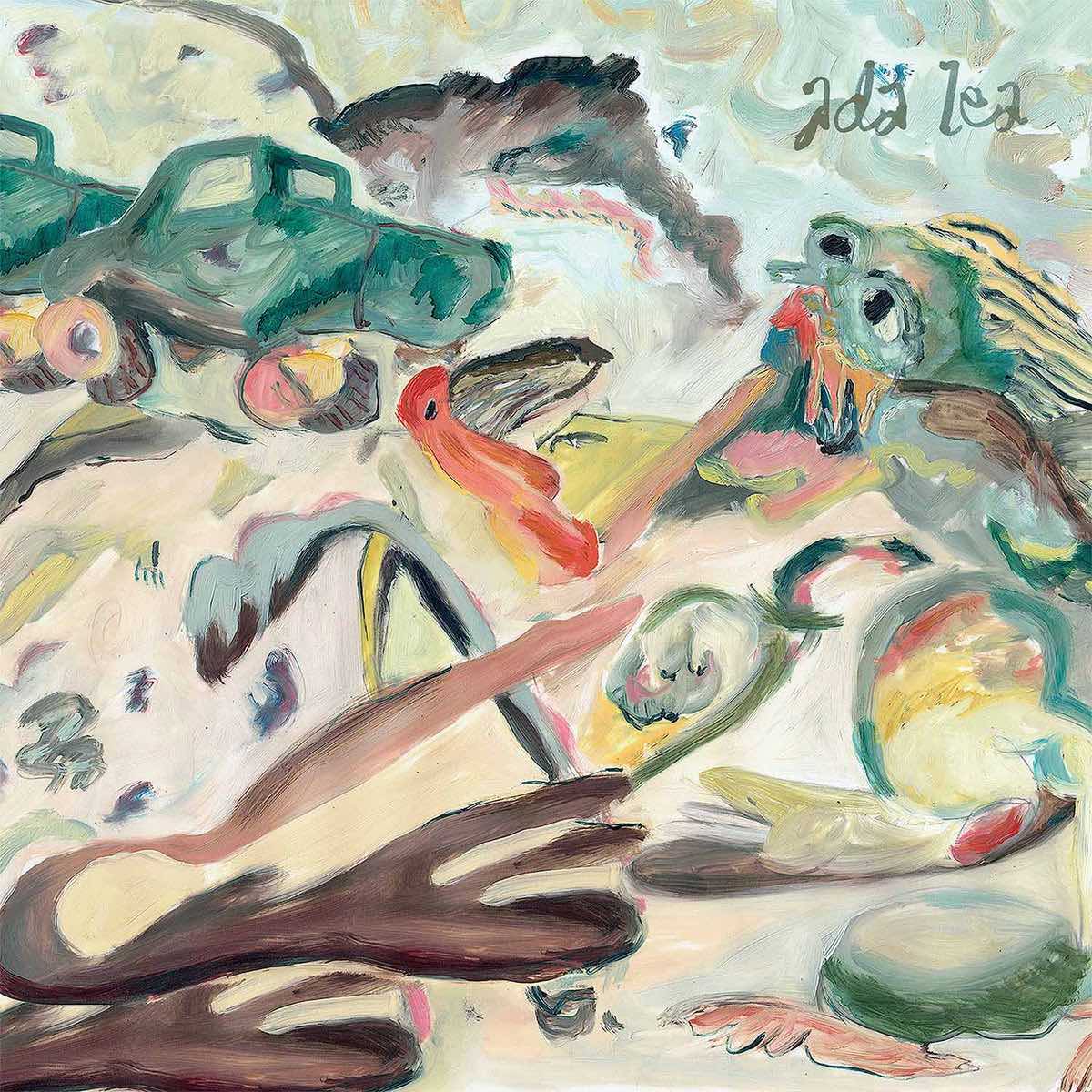



Ada Lea
the end is a wave
SADDLE CREEK
Disillusioned by the music industry, it took Alexandra Levy four years to follow up her sophomore album, one hand on the steering wheel the other sewing a garden. But it’s not because the songwriter (who records as Ada Lea) stopped writing altogether—she claims to have penned 200 songs, in fact, 16 of which made it onto last year’s homespun opus when i paint my masterpiece. It makes sense that we’d hear more songs from that period: just like she accompanied steering wheel with an EP of unreleased tracks, Levy now offers another peek into her overflow of creativity in the form of the end is a wave, which has almost half as many songs as her latest LP.
While some of these tracks were shelved from her last album, others she claims to have recorded “a million years ago when I was just a child. It was to test their fragility,” she explained. “How would they behave next to the other? The old and the new? The brave and the haunted?” For her, EPs aren’t just opportunities for low-stakes experimentation, but a curious reflection of a famous line from Virginia Woolf’s To the Lighthouse: “A light here required a shadow there.” From the jump, she explores how that idea manifests in longterm friendships through the opening track and lead single, “copycat,” which was inspired by a moment toward the end of Elena Ferrante’s Neapolitan Quartet: “I drew two shapes down on the page / The one that shined real light took up all of the space / While the other only suffered cause of where it was placed.”
It’s hard to say whether the songs on the EP would be served better on an album (after all, Levy has released a dance beat-driven single like “copycat” for an LP before), but their placement here makes it easier to home in on the details, to appreciate their subtle contrasts. The acoustic chords on “the evergreen, the birch” are as beautifully simple as the ones on the closer “i miss the heavy shoulders of the trees,” which recalls the lo-fi intimacy of a deep cut from 2019’s what we say in private. Yet the song’s natural imagery, its very openness to the world, is accented by field recordings—even the acoustic guitar sounds arborescent—while its sense of camaraderie is mirrored through MEGGO’s guest vocals. We also get an unvarnished cover of Leonard Cohen’s “Chelsea Hotel #2,” a song it sounds like Levy was born to sing.
The nervously propulsive “okay, ok, o.k.!” and the slower-paced “phases” make complementary observations about the nature of time: “Time makes it so you don't understand / What you never knew to begin with,” and “Time has her way of pulling you through / The phases of the seasons / Without a solid reason to stay and see it through.” You could say the same things about music, and Ada Lea’s is illuminating no matter the format, pace, or logic behind its release.
