
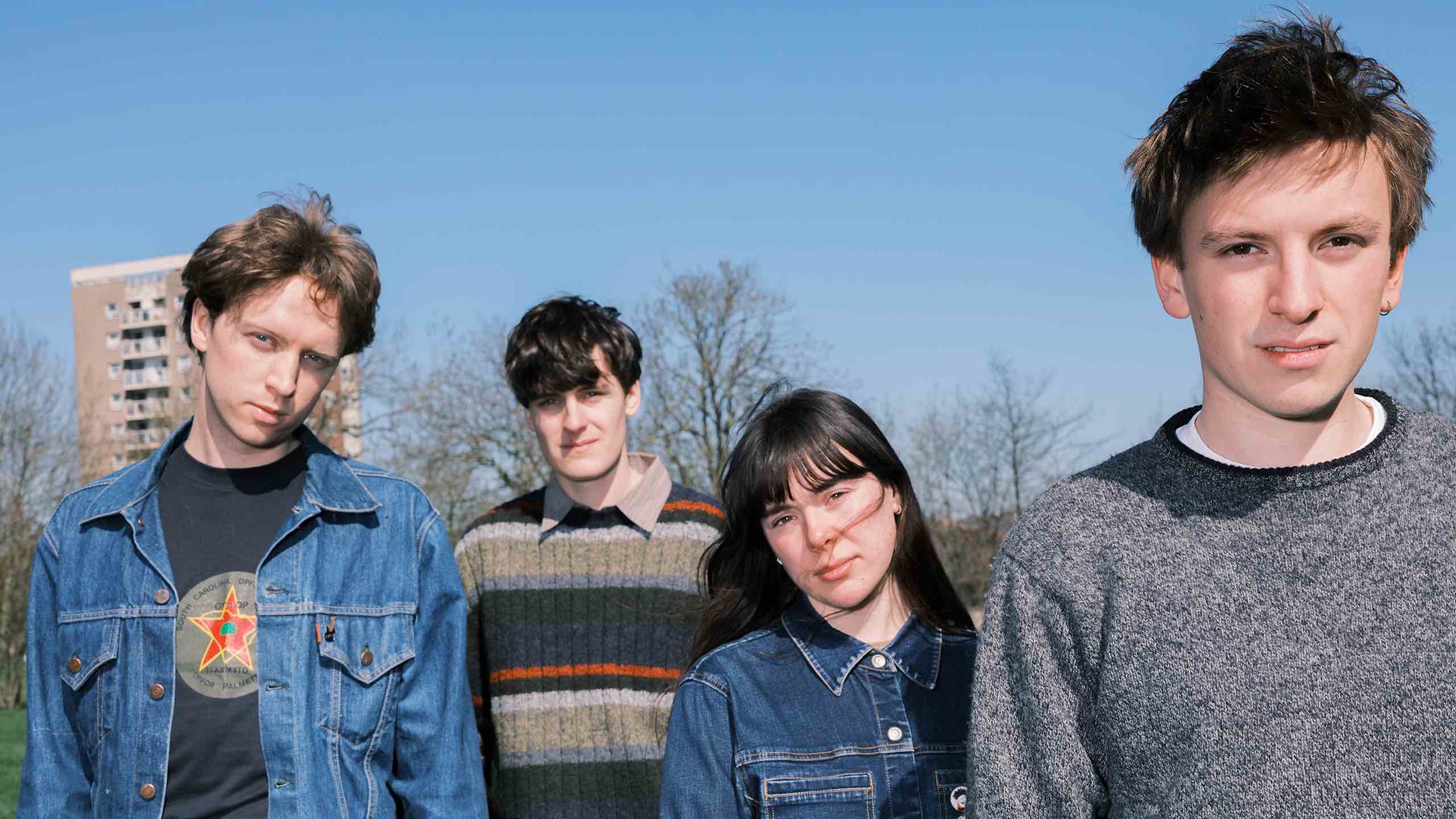


BACKSTORY: Reuben Haycocks, Aoife Anson O’Connell, and Paddy Murphy met as freshman while attending England’s Royal Northern College of Music; Jimmy Bradbury, who worked at a nearby music store and played in a band with Paddy, decided to form a new project with the rest in tow.
FROM: Manchester, England
YOU MIGHT KNOW THEM FROM: Winning Glastonbury Festival’s 2025 Emerging Talent Competition; tours with Black Country, New Road and Geese; or their two EPs released over the past year
NOW: The band is signed to Island Records and are set to release their debut LP It Goes On this week
When Westside Cowboy perform live, the Manchester-based band will habitually do so with such unbridled ferocity and aggression that it feels less like they’re playing their instruments than they are outright attacking them. Guitarist and vocalist Reuben Haycocks, for example, strums with such taut, vibrating energy that more often than not he can’t even make it through the set’s first few songs without his eyeglasses slipping off his face. For all intents and purposes, by the time a given show reaches its endpoint, carpal tunnel feels like an inevitability for everyone’s hands, wrists, and forearms.
Haycocks and his bandmates—guitarist/vocalist Jimmy Bradbury, bassist Aoife Anson O’Connell, and drummer/vocalist Paddy Murphy—are all well aware of how punishing they are at times to their limbs. “We’re getting very old very quick,” says O’Connell. “Reuben, Jimmy, and Paddy have now started going to the gym and using physio resistance bands.” Defending their new strength-training routines, Haycocks jokes, “It’s self-preservation now. We’re crumbling.”
Over the past year, Westside Cowboy have undergone a different sort of endurance test, with the group subjected to a hefty barrage of buzz, anticipation, and expectation from critics and fans alike. The earliest indicator of the band’s growing breakthrough status occurred when they earned a slot to perform at last year’s Glastonbury Festival after winning the event’s annual Emerging Talent Competition. Releasing their debut EP This Better Be Something Great last August, and its follow-up So Much Country ’Till We Get There earlier this year, Westside Cowboy are finally poised to release their debut full-length It Goes On, a record O’Connell says is about “people being young, maybe not always having a good time, but wanting to and having good things around them,” a sentiment steeped in the band’s foundation.
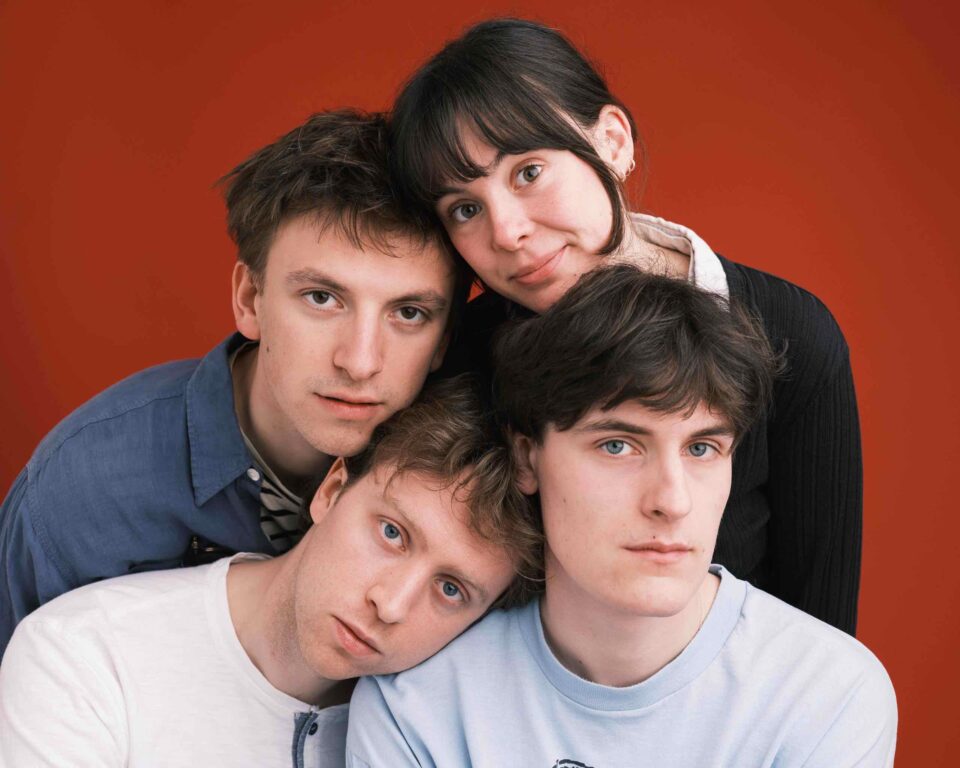
“We had a game plan when recording the album that we didn’t want it to be this sort of big, impactful thing. We wanted the sounds to be relatively tame, and have the performances instead be what gives it its energy.” — Reuben Haycocks
Haycocks, O’Connell, and Murphy all first met one another as freshmen attending the Royal Northern College of Music in Manchester. A few years their elder, Bradbury worked at a local music shop down the road. Prior to forming Westside Cowboy, Murphy and Bradbury performed as part of an outfit called Katz, which sought to make fast-tempoed surf punk. Murphy was also part of a noise-pop band with Haycocks called DieKaiDie. “We wanted to write pop songs, but we wanted our pop songs to be the loudest, most disgusting-sounding pop songs that you could possibly write,” says Haycocks. “It was fuzzed-out guitars, really intense drum machines, synths, and whatnot.” At some point, however, Haycocks says all their experimentation eventually felt like they were just banging their heads against a wall.
It was Bradbury who ultimately offered an escape from Haycocks and Murphy’s overloading creativity. One day in the shop, Bradbury proposed writing and playing songs of a simpler structure. He even already had a name for the new project: Westside Cowboy. Bringing O’Connell into the fold, the quartet’s initial intent was to come up with their own version of skiffle songs á la Lonnie Donegan. As things quickly progressed, however, influences such as Pavement and the Pixies naturally began working their way into the sessions, which Haycocks says resulted in a plethora of material. “We often joke that the first EP was the first week’s worth of songs, and the second EP was the second week’s worth of songs,” he says. “And to be honest, it’s not that far off. There were just loads of songs.”
With the rate of the band’s songwriting keeping pace with their rising profile, by the time Westside Cowboy entered the studio to record It Goes On, the group had plenty of tracks that coalesced around their accessible garage-rock sound. Among the record’s standouts is the lead single “Kick Stones (The Boys),” which opens the album and sets the tone for everything else that follows. Mixing Haycocks’ almost blasé, conversational vocals with the track’s propellent, thumping rhythm, by the time the song reaches its repeated refrain of “Have you heard that the boys, they are gone this time?” the entire song feels like it’s on the verge of jumping off the rails of its own time signature.
“I think it ended up being exactly how we wanted it to sound,” says Haycocks of the album. “We sort of had a game plan when we went into recording the album that we didn’t want it to be this sort of big, impactful thing. We wanted the sounds to be relatively tame, and have the performances instead be what gives it its energy.”
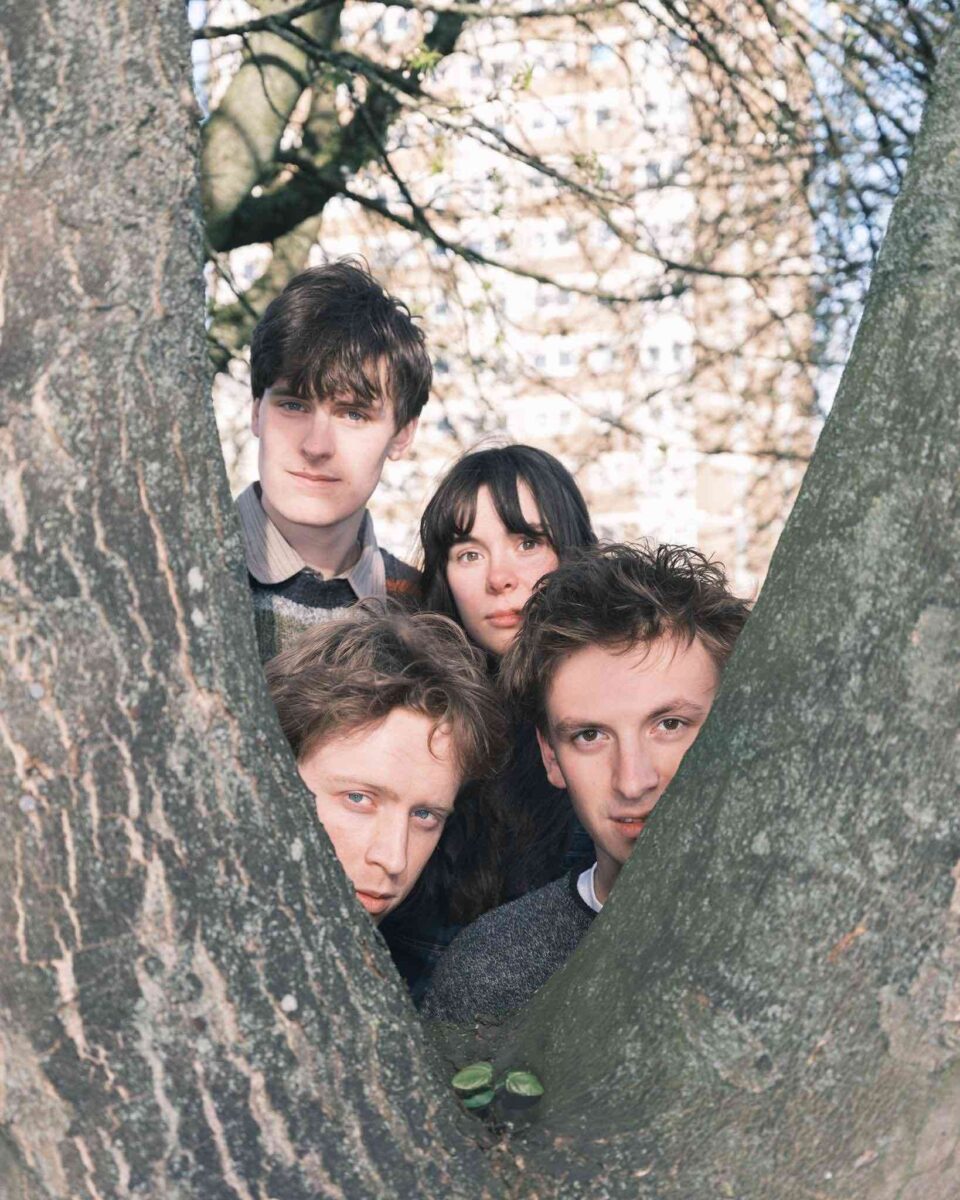
“I think you have to go into these things knowing why you want to record something, and I think for us it was to capture an energy or a real thing that’s happened rather than creating this artifice.” — Aoife Anson O’Connell
“The energy of the actual take is always two guitars, bass, and drums,” adds O’Connell. “It’s the underpin of any of our songs, because we believe that’s what a band is. That’s what recording should be, for us. I think you have to go into these things knowing why you want to record something, and I think for us it was to capture an energy or a real thing that’s happened rather than creating this artifice.”
According to Haycocks, It Goes On is meant to emulate the group’s favorite albums, records that actually sound “really shitty and really thin.” Haycocks argues that while we remember and assume that these records had all these impactful production tricks, it’s really just the listener’s brain that fills in the gaps. They wanted to make a record that did the same thing, where the audience could infer what they wanted from it all.
Ultimately, Haycocks says that they just wanted to make a record that felt as though it were made by a group of friends trying to figure things out as it all comes to them, however fast-paced it is—and however much strength training is required to maintain their spryness on stage. “I hope people say that it sounds like it’s been made by young people,” he says. “I think that that was one of the main things we wanted: to make an album that sounded like a first album.” FL
