




Weezer
Weezer [Gold Album]
REPRISE/WARNER
On a recent episode of his podcast Summer Album/Winter Album, The Hold Steady’s Craig Finn opined that releasing a self-titled record mid-career was typically a sign of creative decline. That’s a particularly harsh appraisal for Weezer, who since 1994 have released seven self-titled records, each colloquially known by its corresponding color. For fans who lost interest sometime around the release of the Green Album a quarter of a century ago, the Weezer discography definitively proves Finn’s theorem, offering an interminable catalog of diminishing returns. For the more charitable fan, Weezer are the exception that proves the rule, with each self-titled album presenting a fresh introduction, a renewed identity, or a surprising left turn.
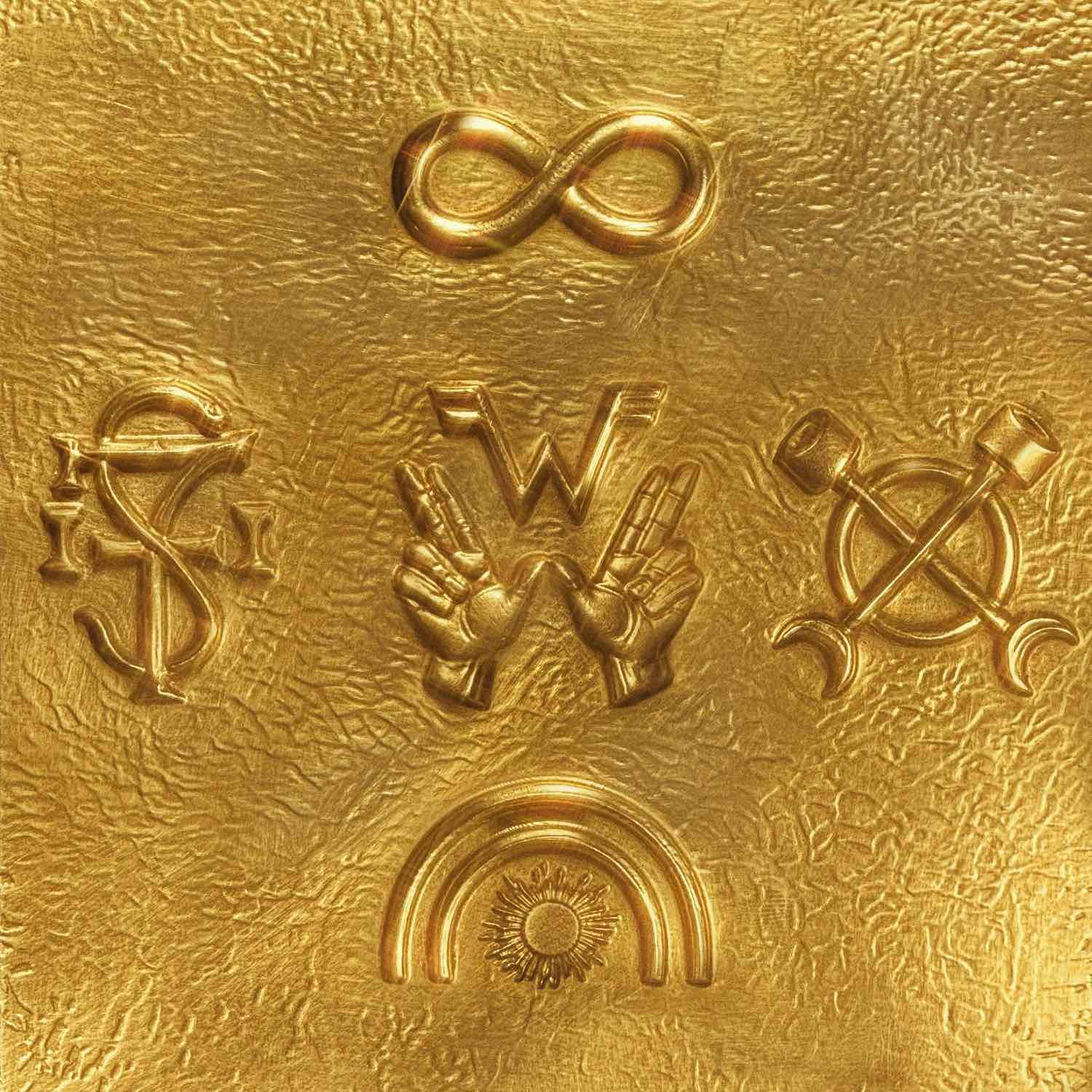
So what version of Weezer are we introduced to on the Gold Album? Given the somewhat unfortunate timing of its release, the embossed album cover recalling the tacky gold-plated updates to Trump’s White House, you’d be forgiven for assuming this is Weezer at their gawdiest, their least tasteful. And to some extent that’s right: Working with producers Kenneth Blume (a.k.a. a newly rebranded Kenny Beats) and Klas Åhlund, the band went into this project aiming for “the most violent Weezer album ever.” It presents their signature power-pop at its most brutal, all schlocky riffs, thundering beats, and scuzzy guitar tones. It’s an album of sweaty jams, offered with nerdish charm.
But it’s also Weezer at their most reflective—or at least their most self-referential. The most obvious example is “C.E.O.,” a song that nicks its riffs from their iconic “Undone (The Sweater Song)” and finds frontman Rivers Cuomo considering his band’s stature with some bitterness. “Cranking out another ’90s jam / Wish I could do something new,” he opens, wrestling with his fate as a greatest-hits act, coming to terms with the fact that any new Weezer album will always live in the shadow of the Blue Album and Pinkerton.
But if there’s a trace of resentment that runs through the Gold Album, the dominant mode is resignation: For the most part, Cuomo and Co. heed their own pep talk, falling back on the kinds of big hooks and dumb guitars that made them so appealing back in ’94. “I only get one chance to show you who I am,” he muses on “Say Yes,” the surging album opener. Indeed, most of the Gold Album coasts on Weezer being Weezer, leaning into the first impressions they made back on their debut, offering a streamlined update on the quirks that made them famous.
What it amounts to is a self-titled album that splits the difference, offering a few new emotional wrinkles without quite dispelling the notion that the Weezer project is running low on ideas. If anything, that’s the point: The Gold Album suggests that Cuomo will simply never top the very first iteration of his band, which means the best he can hope for is a set of new songs that favorably recall the good ol’ days. None of these new tracks sound quite good enough to be new Weezer classics, but they’re close enough to the old ones that the diehards may not mind.
