
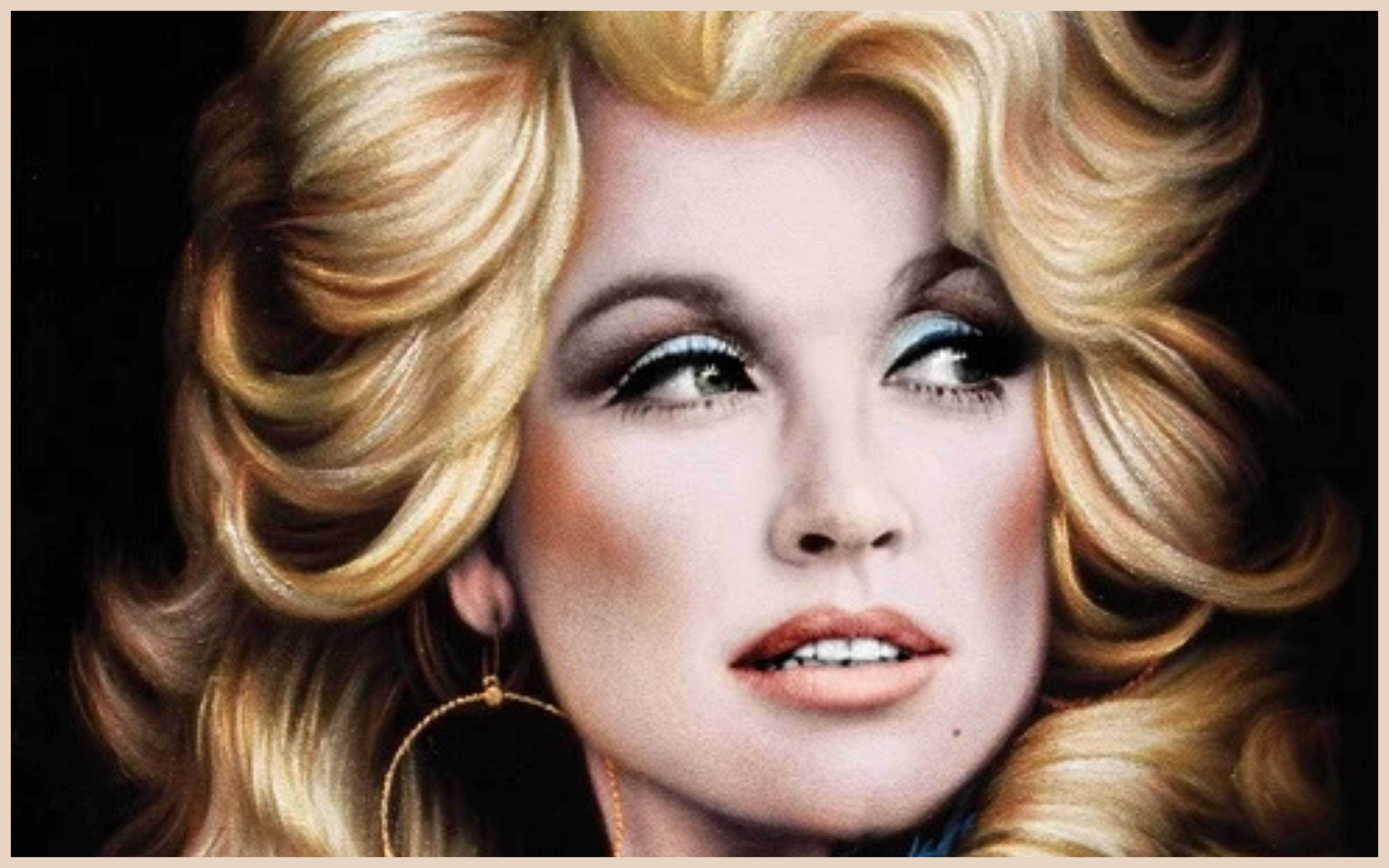
Dolly Parton has passed away. That’s heartbreaking. No matter what genre of music you hold dear, Parton was a huge part of all of our media lives, young and old, for as long as I can recall. But unlike so many equally deserving elders of the arts—especially within country music, where power-ballad rocking C&W holds sway at present—she got her flowers, constantly and deservedly, throughout the 20th and 21st centuries. For just one moment, hold your tears for Dolly.
Parton’s songs and image were a vivid part of the pop-cultural ecosystem well beyond music. Whether it was for Broadway’s stage musical rendition of her 9 to 5 film soundtrack, having goddaughter Miley Cyrus purr-growl her way through countless versions of “Jolene,” hearing nu-grass musicians such as Sarah Jarosz acknowledging Dolly’s inspiration, or having drag queens nobly attempt to accentuate Parton’s positives at every heel turn—physical attributes which she was always self-deprecatingly first to the joke about with bon mots like “It takes a lot of money to look this cheap”—Dolly remained omnipresent.
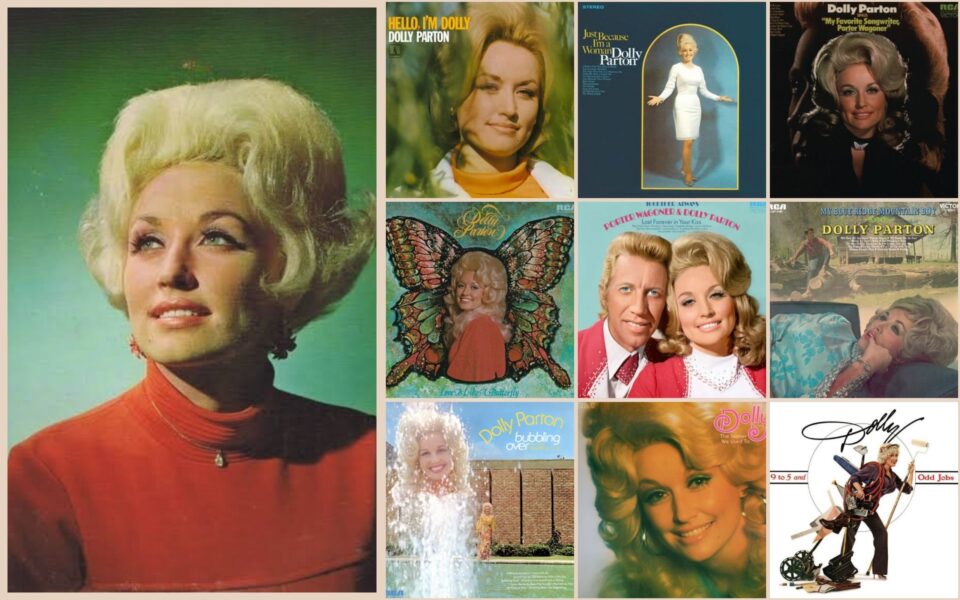
Yet she never wore out her welcome. Far from it: Everyone wanted her, all the time. Doctors named cloned sheep after her. The US Army named tanks after her. The Rock and Roll Hall of Fame wanted to celebrate her even when she didn’t want their medals; theirs was a glittering prize which this country-music icon actually turned down at first, until she was able to start recording her own rock record and make the trek to Cleveland an honest and earned victory. Even Porter Waggoner, her one-time duet partner and employer with whom she feuded, felt fondly about her until the day he died. I remember interviewing him on the occasion of his last studio album, Wagonmaster, and his Madison Square Garden gig with The White Stripes and Nick Cave’s Grinderman. No sooner than I mentioned Parton, he began to choke up and remark how amazing and individual a talent she’d been.
If Dolly Parton knew anything about herself when she died, she surely understood that she was adored and acknowledged for every part of her life, looks, and music, and that every part of her was designed to empower—her own agency, and that of womanhood itself. All to a score of comfortably rural melodic folk, delicate bluegrass, and sparkling, often complexly orchestrated country-music soundscapes. What made Parton’s songs iconic was her home-derived authenticity (a word that gets bandied about far too much at present), her natural talents as an instrumentalist (she didn’t read sheet music), and her innate storytelling ability to create genuinely haunting atmospheres without having her female characters become or remain the victim.
Long before people talked about giving women their agency, Parton just took it. “I look totally artificial, but I am totally real, as a writer, as a professional, as a human being,” she once said. “A rhinestone shines just as good as a diamond.” Taking cues from her aunt Dorothy Jo Owens, who could play any stringed instrument, and her mother—a woman whose “old timey voice” brought together elements of “the Old World…English, Irish, Welsh, folk songs where people tell stories”—Parton always marched forward from a woman’s POV.
“Jolene” may be vulnerable in expressing one woman’s desire to not allow “the other woman” to take her man, but it’s pure confrontation from start to finish. The abandoned pregnant woman of “The Bridge” not only decides the hows and whens of her fate, Parton does so in such a genuinely ominous fashion, cutting off her protagonist’s screed right in the middle of the verse (if this isn’t a murder ballad turned on its head, nothing is). What is “9 to 5” but a reclamation of female empowerment in the workplace? Even “I Will Always Love You,” one of the best-selling songs of passion and romance, is all about the lead character making her own mind up—her decision—to end the shared affair and not look back. This isn’t the traditional male heartbreaker informing the woman to be brave. This is Dolly telling her lover, “Goodbye, please don’t cry.” Even Dolly’s first-ever hit, 1967’s “Dumb Blonde”—playing upon the tired trope of female inferiority—starts and ends with putting that meme to bed before it even started. “This dumb blonde ain’t nobody’s fool.”
“When I’m done, I can rest in peace knowing I’ve done my best. I hope that when my time comes, I’ll leave something behind that others can use to lift themselves up.” — Dolly Parton
In a world not known for true generosity, Parton—a woman who Paul McCartney called a great and progressive business woman in the name of music publishing—insistently and consistently gave up her time, money, and spirit on behalf of the rights of children and animals, programs dedicated to literacy, the needs of her home state of Tennessee and its underrepresented communities, and vaccines throughout the COVID pandemic. As a woman who didn’t give birth to her own kids, Parton said often that she’d make the world her family. That may sound corny, but she walked the walk.
The fact that Parton continued with righteous empowerment and her mother’s high soprano as lyrical and musical touchstones are what made Parton eternal, as opposed to giving someone their props just because they stuck around. Parton spent a lifetime making sure women had the agency they deserved, because she took it for herself. “When I’m done, I can rest in peace knowing I’ve done my best,” she wrote in her memoir Star of the Show last year. “I hope that when my time comes, I’ll leave something behind that others can use to lift themselves up.”
Suddenly, Dollywood is no longer a theme park where you can celebrate Dolly Parton’s image. It’s a state of mind where her music lives on forever. We should all live in such a place. FL
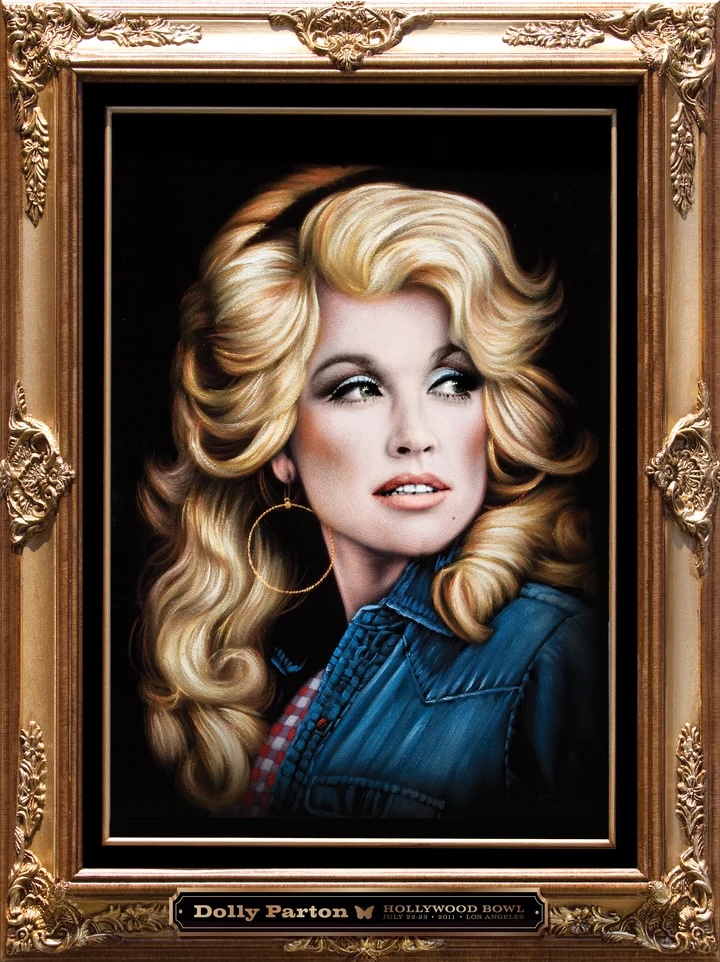
Art by Kii Arens. Limited prints available HERE.
