




The emotional divisions between those who hate Digger and those who love it run as deep as the gullies that separate supporters of Macklemore and those still backing Ed Sheeran. The passions that elevate the film to such import seem to come down to the conceits of director and co-screenwriter Alejandro G. Iñárritu’s blackly comic, apocalyptic, white-privilege-driven world order when it comes to the topics of climate change, oil, and the billionaire class tied into his script’s interconnectivity to the art (and commerce) of theater and film itself, with its star—the world’s biggest, still—portraying the great Caucasian savior even in his dotage and weightiness, both figurative and literal. I’m confident that this is why critics are inordinately leading the charge to make certain it dies on the first-week-showing vine.
Yet I can confidentially state that Digger is among both Tom Cruise and Iñárritu’s finest moments in film, sitting alongside cinematic glories such as, respectively, Magnolia and Birdman—both of which share storyline similarities with Digger in their reach into the world of theater, the art of acting itself, and the relationship between children and their familial elders. With all that, there are other films, scenarios, and humors that Digger borrows from, or shares connectivity to—Citizen Kane, Planet of the Apes, Brewster’s Millions, Dr. Strangelove, Being John Malkovich—all while freshly exploiting, satirizing, and intertwining the very worst aspects of apocryphal historical reenactment, morbid multimedia theater, and prophetic disaster porn.
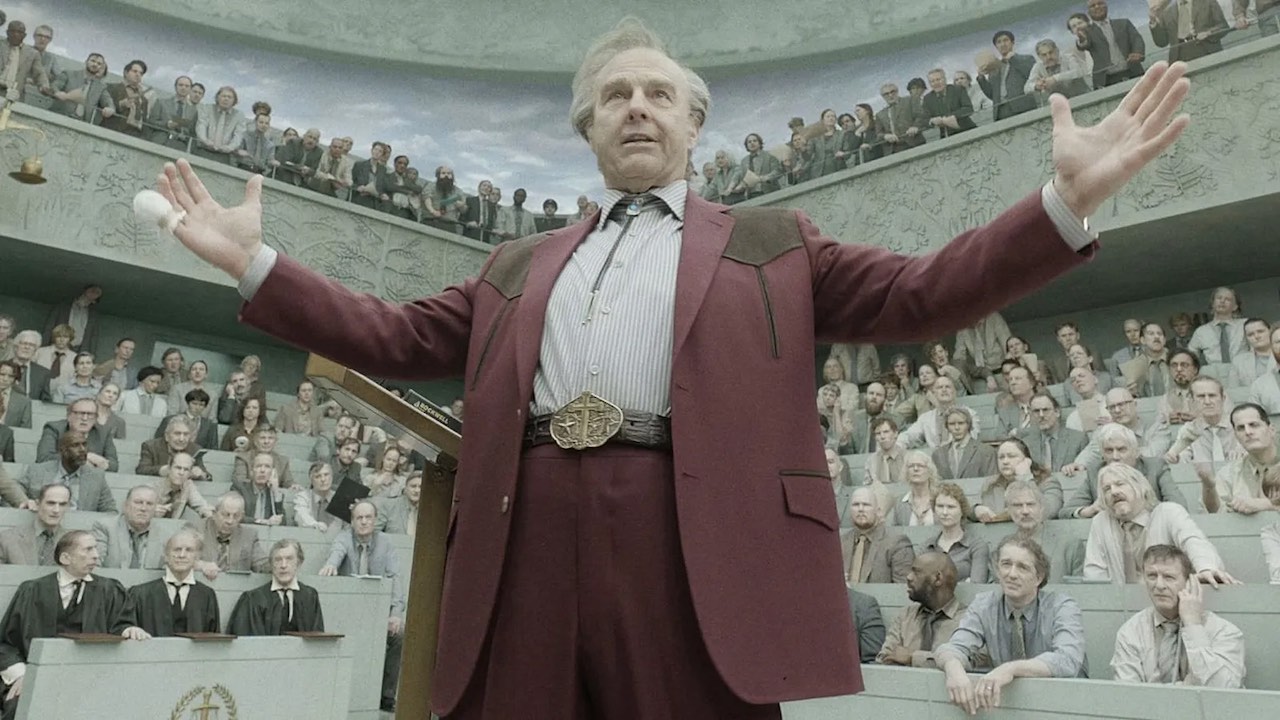
Cruise stars as Digger Rockwell, an old-school oil magnate who came up with a tough work ethic personified by the film’s namesake totem: his fathers’ beat-up shovel. Digger’s loudly pronounced force of will runs as deep as his love for his long-suffering cat, a tearful devotion that you’ll witness in the actor portraying Digger in the film’s satirical play-within-the-film, Curtis Markson (also played by Cruise). The legendary stage thespian leads the charge for an anniversary edition of Fossil Fools, an in-dress-rehearsal multimedia work of theater designed to dramatize the crimes of Rockwell and the colluding Compson (John Goodman), a US president (or brand?) with no first name, that hasten the planet’s extinction with their oil extraction business in Greenland and their willful world-destructive ignorance—a mad practice that one Digger-hired environmental scientist, Dr. Nirav Ganesh (Riz Ahmed), refuses to hide.
The film’s audience doesn’t know about the existence of Fossil Fools until it does—when, suddenly, Rockwell’s garrulous, cantankerous characterization goes softer, fills the screen (or is it the stage?) with a theater careerist’s vanity, then a sadness and fear over the welfare of his children. This moment is aided by the play-within-the-film’s mysteriously quiet (until he isn’t) Kenny Rockwell, Digger’s now grown-up nephew (played by Jesse Plemons), a long-embittered witness to his uncle’s catastrophic carelessness and the current rights holder to Fossil Fools in this anniversary production. He’s a man whose sole desire is to better massage his family’s public relation machine while giving the public a way to express their grief—a collective sorrow that Markson believes is trivialized and misrepresented in this play, until he doesn’t.
While Iñárritu portrays Digger with Emmanuel Lubezki’s towering cinematography and muted colors, co-screenwriter Iñárritu tackles Digger and its venal, Terry Southern–derived, Kubrick-like satire ham-fistedly. But its Fossil Fools’s backstory (or story-within-a-story-within-another-story) that’s presented with a mix of pathos and tenderness. Or at least where Tom Cruise comes into picture. Because while Goodman’s Compson, Ahmed’s Ganesh, and Digger’s military mighters are played as cartoons—and Plemons’ Kenny Rockwell is the quintessential wounded, over-compensating child—Cruise’s dual roles stand out tall as a richly played rainbow of flustered, blustery tics and understated emotion.
Pushing the world’s greatest (at least its most bankable) action actor/producer to inhabit the skin of an elderly robber baron is one thing. Cruise’s grace and spontaneously combusted physicality brings that same action-hero feel into the soul of a flabby old man whose ass crack is as visible as his affection for his dying cat, an obviously electric stage prop whose batteries’ life is ebbing away. If it wasn’t enough that Cruise’s self-choreographed man-you-love-to-loathe Digger character deliberately, demandingly, dramatically sucks up all the air on screen and in (every) scene, there’s Curtis: Cruise’s symbolic visage of the tortured, vain artist made human, and brought down thuddingly to Earth by familial, societal, and existential dilemma. Both of which land the film’s and the play’s audience at its devastated finale, which you had to see coming, and yet still brings with it a chill and a chuckle.
Hate Digger if you will, but give it a chance if for no other reasons than to witness Cruise in his most tragicomic performance since Magnolia. For there’s no greater reward in drama or comedy than to know the punchline but to still have it all feel like a punch.
