


In 1971, there was no filmmaker more provocative than Ken Russell. Like a Ryan Murphy with several serious (even camp-horror) coals in the fire at once, the British director—coming off Academy Award and Golden Globe nominations for his rapturous, graphic take on D.H. Lawrence’s Women in Love—dropped three films in one year, each one more successful (artistically, at least), more inventive, and more controversial than the one before it. The Music Lovers was a nightmarish rock-esque biopic of Tchaikovsky which tragicomically portrayed the composer’s flamboyant homosexuality alongside his frustrated wife’s increasingly mad passions. The Boy Friend wasn’t so much inflammatory as it was a lavishly fey Busby-Berkeley-style musical released at a time when it was assumed that no one cared about lavishly fey musicals, innovative as it was.
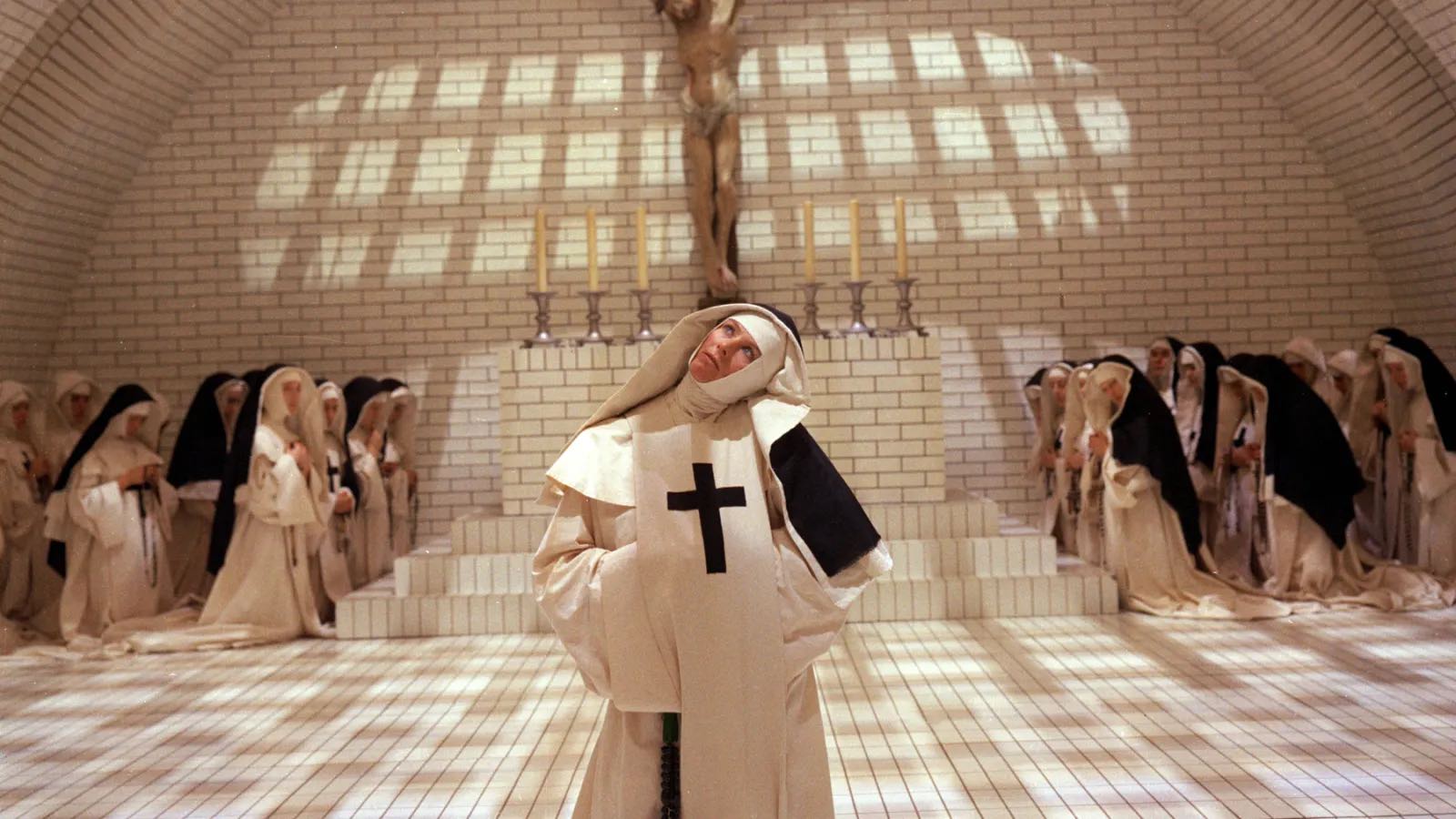
Then came The Devils. Based on Aldous Huxley's hysteric, historic account The Devils of Loudun and playwright John Whiting’s thundering The Devils, Russell’s propulsively graphic (and very British) film was the spine-tingling height of post-psychedelic fantasmagoria with its rampant, naked display of sex-starved nuns, holy politics topped by self-righteous rhetoric, blasphemous religious imagery, exhalative exorcisms, molasses-thick and heavy-handed symbolism, and hardcore torture scenes involving the film’s forceful protagonist, Urbain Grandier, the 17th-century Catholic priest accused of witchcraft after a rumored series of possessions in France, as reported by the convent’s high-strung head, the neurotic Sister Jeanne des Anges.
The Devils was such an incendiary polemical, heretical sin-o-matic experience upon its 1971 release that it was shredded in the edit bay by its distributor or given an X rating—or banned outright—depending on where in the world you tried to view Russell’s menacing, sadistic, weirdly humorous masterwork. Despite having a director's edition in its first theatrical re-release in the UK in 2002, The Devils, cut or uncut, never debuted in Region 1 on DVD/Blu-ray, nor has it been available via streaming or digital distribution. For the most part, the only way cinephiles were able to see it after its initial release was through repertory theater spaces specializing in screening rare film fare, foreign features, and arthouse cinema, or via bootlegged VHS tapes. If you weren’t busy throwing toast at Tim Curry or gabba-gabba-hey-ing with the Ramones at such screenings, you were agog at the willful, way-surreal spectacle of The Devils.
While many found its overheated ultraviolence, rabid sexuality, and anti-religious themes to be something of a reprehensible, disreputable, sacrilegious mess, as a teenager I was mesmerized by Russell’s grandly baroque theater, black comedy, and dedication to creed and history. As a Roman Catholic who holds his faith high, The Devils wasn’t irreligious; the film was designed to lampoon the hypocrisy of and cruel corruption within the mortal church’s bedfellow partnership with the French government of the 17th century, and how both hoodwinked their twin populace—that is, when they weren’t busy repressing women or stealing land. When they couldn’t win with words or convince through favor, they conquered by force. As the 19th century English-Catholic historian Lord Acton said, “Despotic power is always accompanied by corruption of morality.”
So it isn’t wrong, or even contradictory to religion’s beliefs, to hold God dear to your existence and think highly of Russell’s aesthetics and historic impact as he points accusatory fingers at France’s heads of church and state as the real devils of his story (Russell always insisted that he was a staunch Roman Catholic after converting in the ’50s). Loving The Devils is an act of piety and good filmic taste. Besides, my guess is that Jesus has a pretty healthy sense of humor and likes a good action story with colorful cinematography and a bang-up ending.
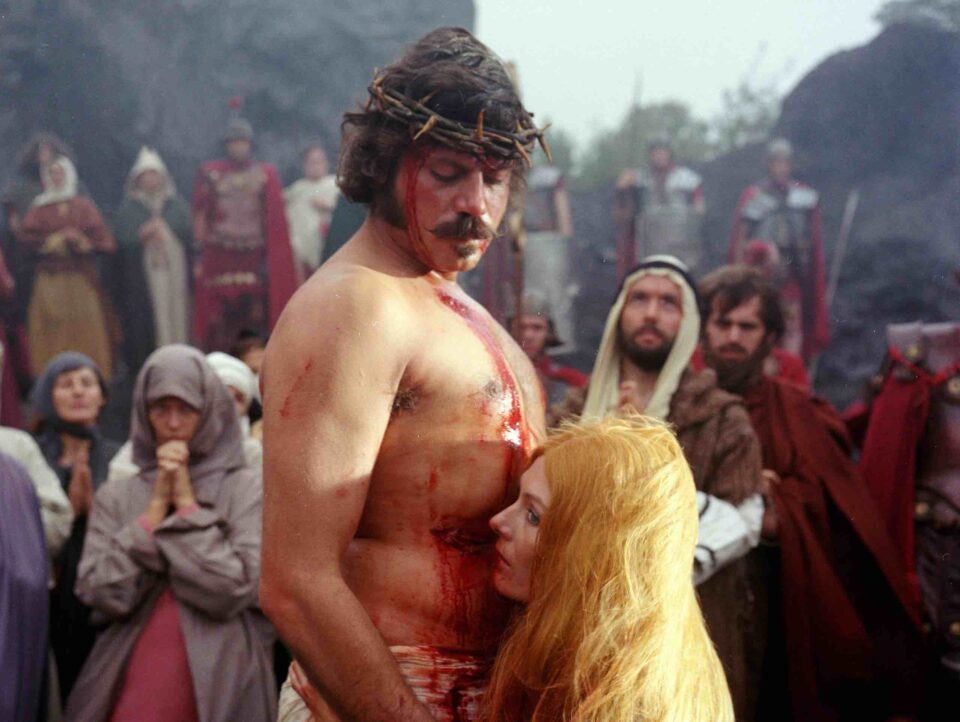
Over the weekend, Warner Bros. (or Skydance, rather) opened the doors to its new independent film division, Clockwork, with the remastered, restored, and recut 4K, NC-17 version of The Devils showing in theaters for seven days. Miss this at your peril (after that, watch for its digital and physical release to follow). Written and directed by Russell with gorgeous, crisp cinematography by bounce-light innovator David Watkin, Clockwork’s 4K version is an architectural, cinematic wonder with long-lost scenes restored to its epic framework (e.g. nuns using bones to masturbate) and full-blooded reds, deep whites, and angular marble arches brought to lustrous display courtesy of Russell’s own private edit and Warner’s original camera negative (not to mention the vibrant production design handled by a pre-Jubilee Derek Jarman).
And while Russell’s script is a masterwork of gregarious political truthiness (imagine Bullworth if religion, rather than race, were at stake), The Devils’s words—so oddly in tune with those of our most corrupt 21st century leaders—get real weight when spoken vindictively by Vanessa Redgrave as the comically humpbacked, crook-necked Sister Jeanne and the barrel-chested Oliver Reed as Grandier, a prophetic, booming character equal parts town sheriff, confessor, whistleblower, and pimp. With a mustache that dwarves that of Robert Eggers’ Nosferatu and a raw, sensual Stentorian manner to match his voice, it’s easy to see why the rakish Grandier becomes the object of wanton obsession for Jeanne and her sisterly minion, and a roué whose sheer candor and progressivism threatens to topple the fine web of treachery uneasily stitched together by church and state.
“This new doctrine, especially invented for this occasion, is the work of men who are not concerned with facts or with law or with theology,” Reed’s Grandier states to his accusers before his ultimate, tortured fate. “But a political experiment to show that the will of one man can be pushed into destroying not only one man and one city, but one nation.” Corrupting absolutely never looked and sounded better than within the (theatrically released) walls of Ken Russell’s The Devils.
