
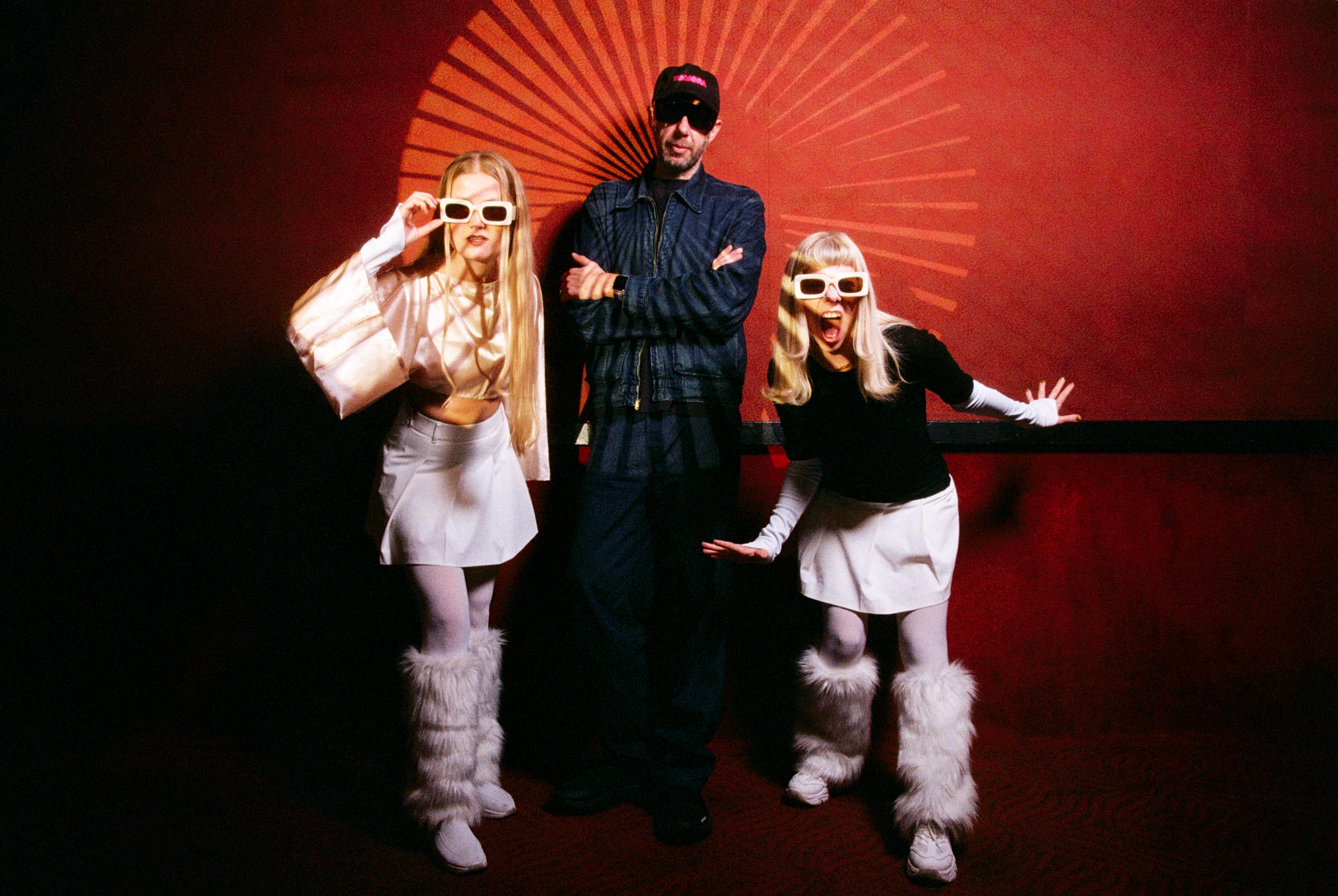




There’s something surreal about seeing Tom Rowlands flanked by a pair of blonde bombshells on Coachella’s Gobi stage. In all-white cut-out dresses, elbow-length gloves, and tall furry boots—their platinum hair blending into translucent skin—they are riveting. As one half of The Chemical Brothers, Rowlands has spent over three decades as a shadowy figure, letting high-octane music and stadium-sized visuals do the heavy lifting. The robots-meet-club-kid blondes pulling Rowlands away from the safety of the machines and into a center-stage position are AURORA and Amalie Holt Kleive—the former his partner in TOMORA, their new collaborative project. The Coachella 2026 performance is their first in North America, just a week before the release of their debut album, Come Closer.
A month prior, Rowlands sits in his home studio in Southern England, spooning up porridge. From her home in Bergen, Norway, AURORA—wearing a striped shirt that creates a dizzying optical illusion—assures him she’s already had lunch. The warmth between them translates easily through the screen. TOMORA may be new to fans, but their relationship spans a decade: Rowlands caught AURORA’s performance on the live broadcast at Glastonbury Festival 2016 and she captured his attention. “Something connected with me,” he says. “Sometimes, by the next week, you’ve forgotten. But I hadn’t forgotten and I pursued it to see where it would end up. She took that leap of faith and got on a plane. I picked her up from the airport, we came to my studio, and within 20 minutes we were making music. It was an inspiring situation to be in.”
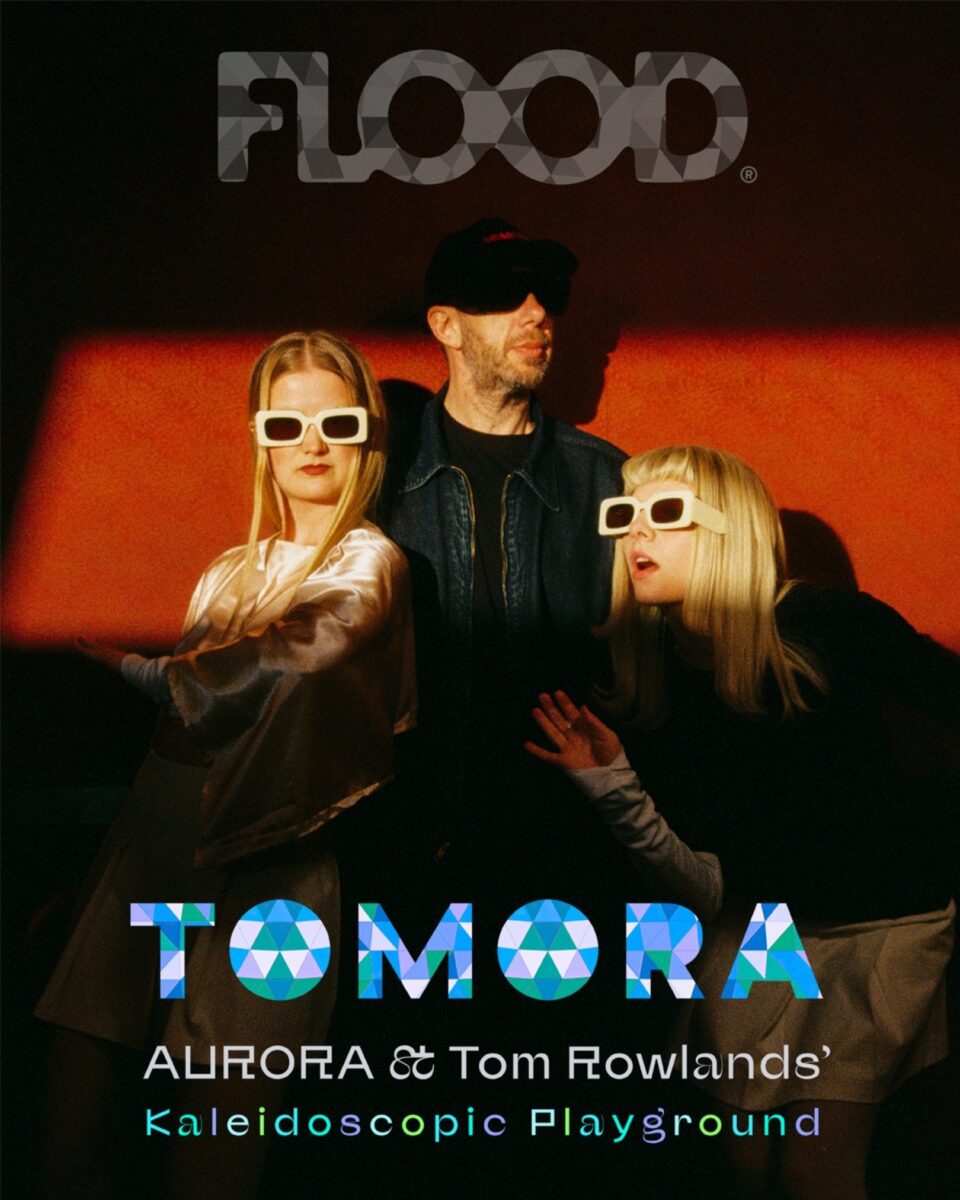
AURORA features on three songs from The Chemical Brothers’ GRAMMY-winning 2019 album No Geography, with “Eve of Destruction” soon becoming a staple of the duo’s live set. Rowlands, in turn, was involved in the production of “My Name” and “My Body Is Not Mine” on AURORA’s 2024 album What Happened to the Heart?. AURORA is the only one of The Chemical Brothers’ many collaborators who’s later spun off into a stand-alone project with one of them. “There was obviously some click between us,” Rowlands remembers. “Things were just flowing—which is not always the case, especially when it’s two people who don’t know each other at all. The studio can be a tense place. It can be a frustrating place. But this was not that. It was about the joy of making music, which was a nice feeling. Ed [Simons] and I finished a long tour. To go straight back in the studio to make an 11th Chemical Brothers album, I felt like I needed some other thing to think about. It’s a nice thing to play around in the studio with someone, and that’s how we arrived to today.”
He makes it sound simple, and it likely was. Yet it remains unusual that these two creatives found each other. Besides the fact that the first interview I did with Rowlands was two years before AURORA was born—and he was already breaking barriers in electronic music—she comes from what she calls “a small Norway town in the woods.” Her mother liked Leonard Cohen, and her father was a Bob Dylan fan. Enya was also heard around the house, but not much else. She discovered music on her own, and while she says she doesn’t listen to music much, when she does, The Chemical Brothers are in circulation—as is heavy metal (“I’m Norwegian and we all love heavy metal”). “When I got the email [from Tom], I remember being like, ‘These things can happen?’” she says. “I was still very new and very unknown. The only world I knew was my own. When Tom invited me into his and their world, I got really honored and felt, ‘This is exactly what life needs to be: unexpected things happening, saying yes to them if it feels right, then wonderful things are going to happen.’ The more you’re open to things, the more fruitful and fun life becomes.”
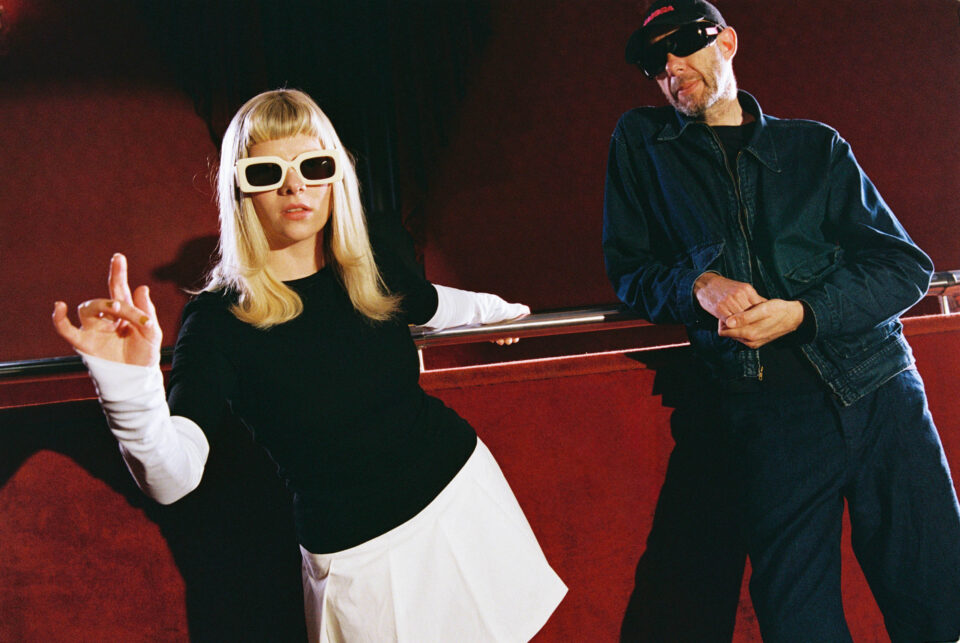
“[AURORA] took that leap of faith and got on a plane. I picked her up from the airport, we came to my studio, and within 20 minutes we were making music. It was an inspiring situation to be in.” — Tom Rowlands

They both acknowledge that their established musical identities are very strong. But when they come together, a new, similarly strong but totally unique personality emerges—one that’s equal parts Rowlands and AURORA, but doesn’t carry the expectations of their primary projects. “It’s important to remember for both me and Tom—and for everyone who’s frightened and needs time to adapt to this new thing—that it’s OK for all things to exist at the same time,” says AURORA. “Nothing is going to disappear just because something else arrives unannounced into our lives. They can all coexist, which is fun and weird. We’re good at listening to each other. We remain curious and on-the-hunt.”
“Always on the hunt,” Rowlands emphasizes. “We sit in this room, staring at each other, seeing how each other responds to what we’re doing. The way we react to sounds is similar. I love the moment when we’re making music, and maybe we have a sound or a feeling and there’s something that is exciting me, but I can’t really communicate what it is. AURORA is an interpreter of the sound. She’ll just zone in and say, ‘There’s a woman, she’s alone, and there’s moonlight coming through the window.’ This whole world is created from this sound.”
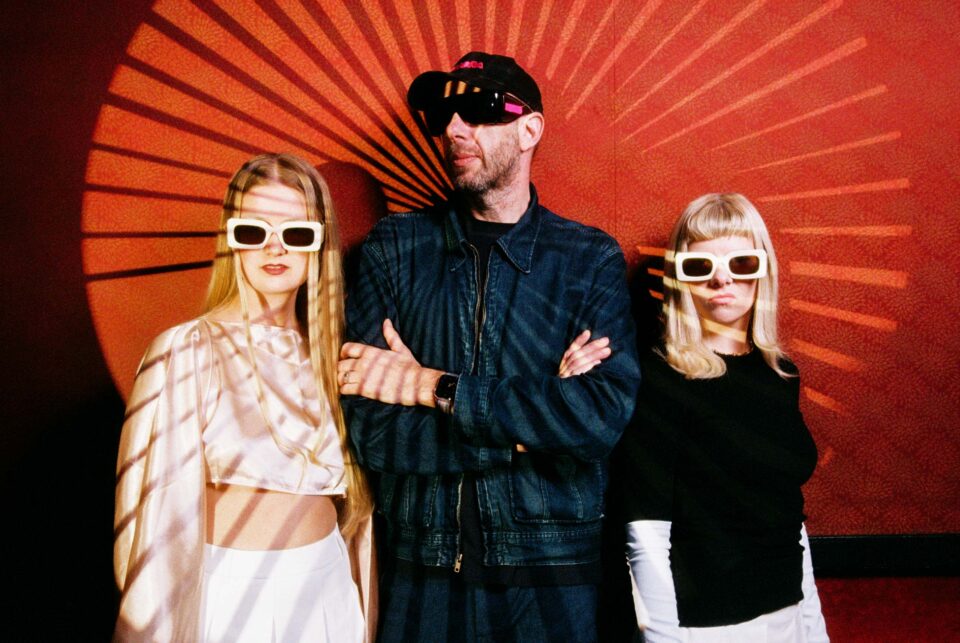
“I felt, ‘This is exactly what life needs to be: unexpected things happening, saying yes to them if it feels right...’ The more you’re open to things, the more fruitful and fun life becomes.” — AURORA

While TOMORA is a 50/50 project with both Rowlands and AURORA involved in the production, Come Closer sounds identifiably like a Chemical Brothers album with AURORA involved in every song. Made over the course of a couple of years in between other commitments, when they came together intermittently, they were able to pick up the creative thread instantly, though they didn’t share ideas until they were in the studio together—either Rowlands’ or AURORA’s with her parents bringing in trays of treats. “Often before a session, maybe you send ideas over,” says Rowlands. “AURORA is like, ’I don’t want to hear anything until the moment I hear it, and the microphone is on, and the feeling is how it is the first time I’m going to hear it, in this room with the speakers up, and the vibe good.’ She’s very open to the frequencies. The receiver is set.”
“That’s why it’s important that we’re in the room, reminding us that music is connection,” says AURORA. “It’s very important to hold onto the meeting between humans when it comes to the world of creating music. It’s like the way you judge yourself in the mirror and you think, ‘Well, I guess I’ll live with that,’ and you go on about your day. When you have people who are with you in person, they see how you look when you laugh, how you look up when you think, or how you look down when someone compliments you. All the small things that make you a person and a soul are noticed in the moment. It’s the same with music.” This connection carries through to the live show, which AURORA says is “going to make it so human and spiritual. We’re going to be able to practice in-person the very thing we say on the whole of the album, including the name of the album: being closer to the audience.”
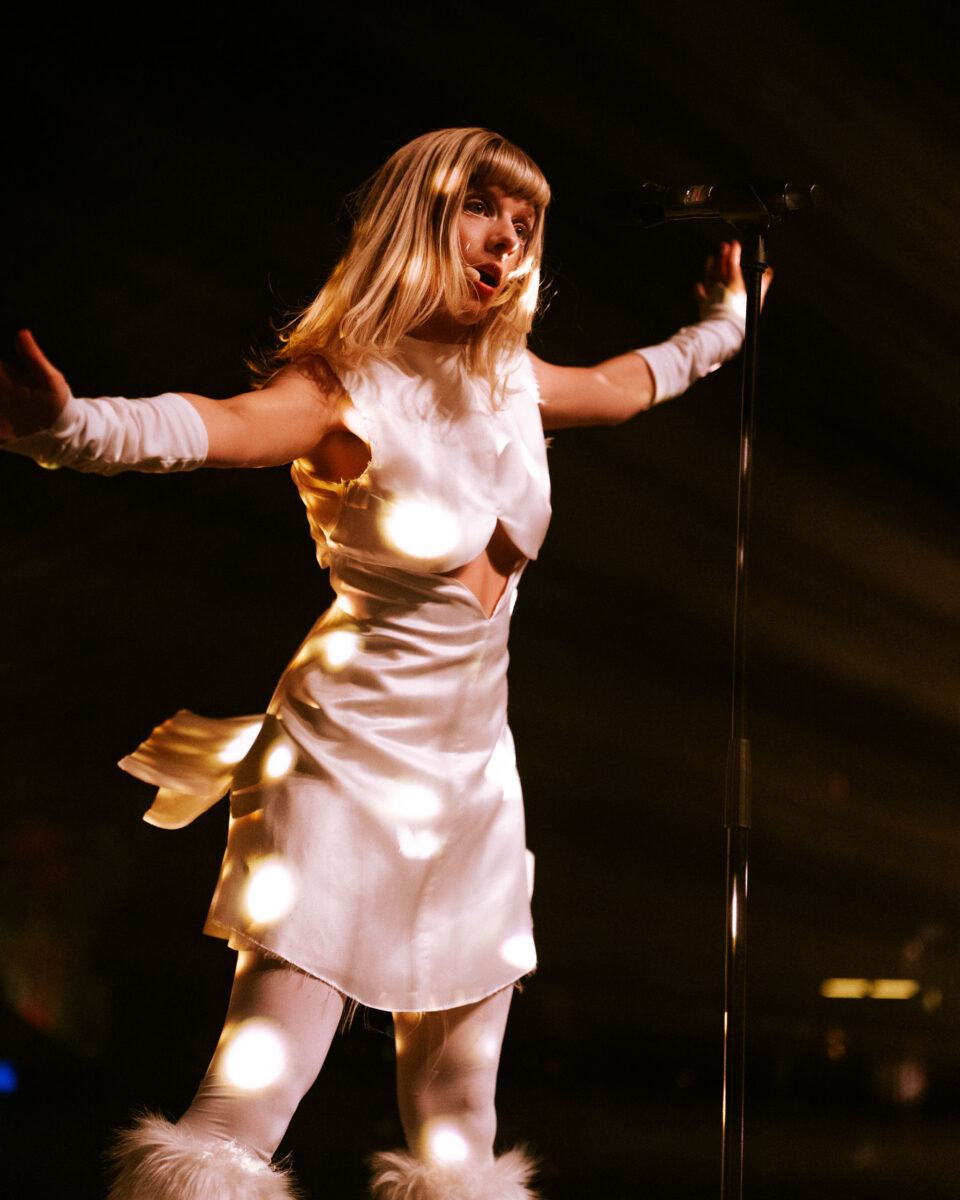
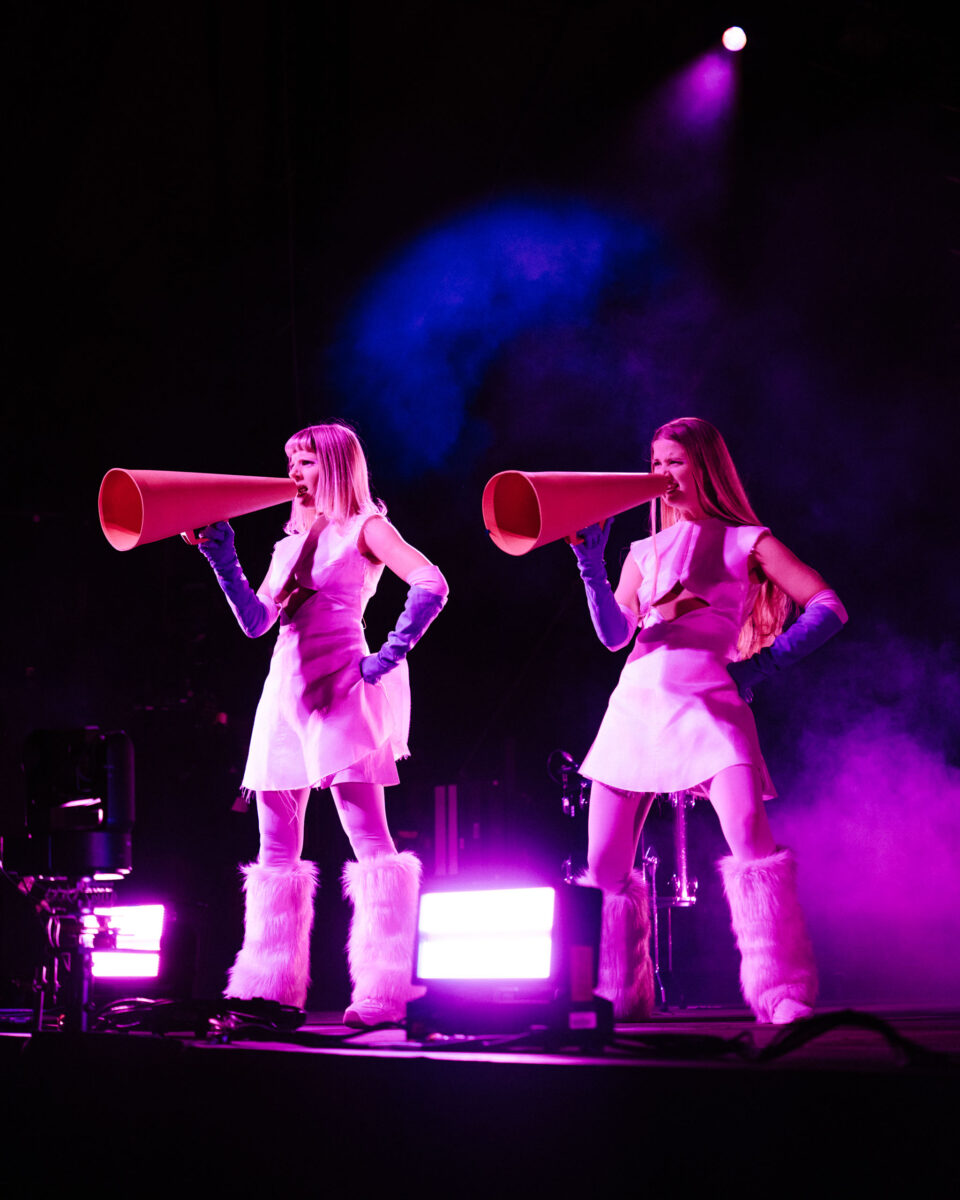
TOMORA at Coachella Weekend Two 2026 / photos by Beth Saravo
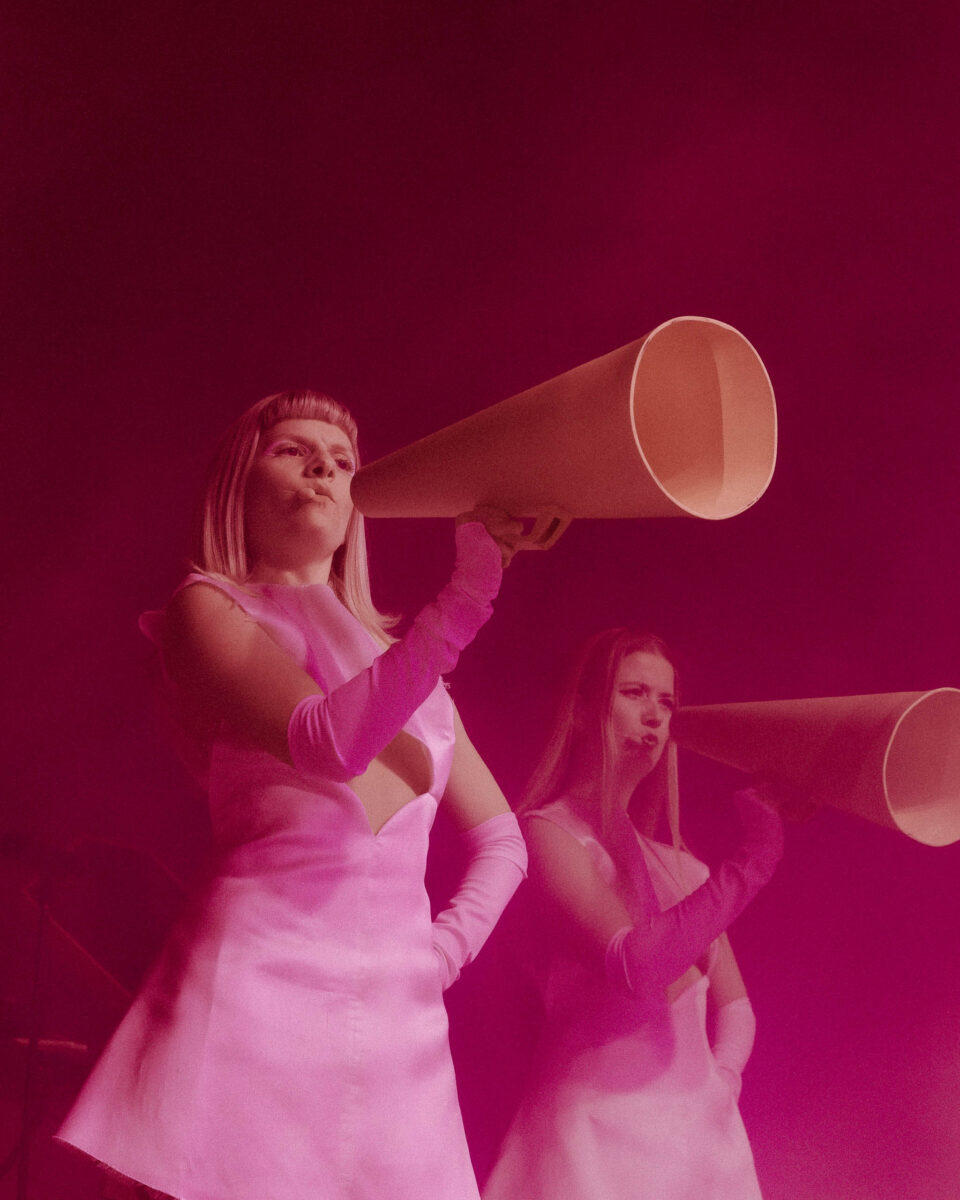
TOMORA / photo by Gabriella Hughes

TOMORA at Coachella Weekend Two 2026 / photos by Gabriella Hughes
That’s already been established by the first weekend of Coachella, and was translated to mid-sized theaters the week in between the festival’s two sets. For the stage show, they collaborated with Adam Smith, one of the masterminds behind The Chemical Brothers’ live shows, who also worked with AURORA on her last tour. For TOMORA, Smith combines the specificity of a Chemical Brothers performance with the playground of an AURORA concert. He joined them in Bergen at AURORA’s parents’ home during early recording sessions, which informed how he approached the visuals. “It was such a privilege to be there and watch them playing in the most brilliant way,” he says, speaking from his home in London. “I got the sense of how this music was full of mischief and fun and joy and play. They weren’t just playing music together, they were literally playing together.”
Smith collected hundreds of images of whatever intuitively felt applicable to the project. Rowlands and AURORA went through them and chose the ones they immediately responded to, among them the eye-catching pink cat so central to the show (that pink, along with cyan, is one of the distinctive visual characteristics of TOMORA). Smith’s approach wasn’t to rehash the cost-prohibitive Chemical Brothers show, or even AURORA’s, but to use the limitation of resources to push creativity. That’s where he got the idea for the live cameras, a key part of the backdrop visuals which he worked on with his Chemical Brothers visual partner, Marcus Lyall.
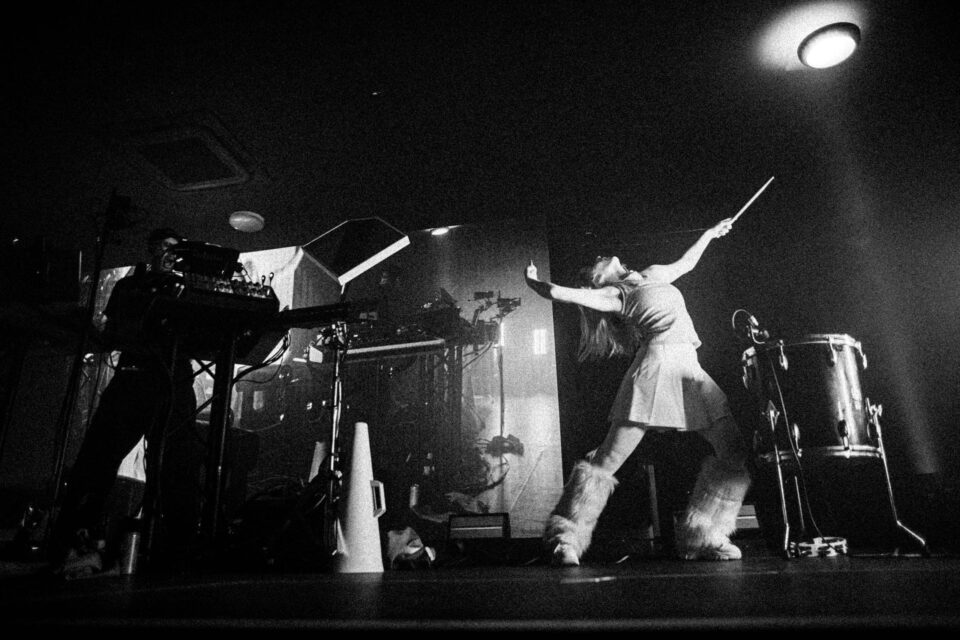
TOMORA’s first show at New Century in Manchester on March 25, 2026 / photo by Dan Lowe
“I got the sense of how this music was full of mischief and fun and joy and play. They weren’t just playing music together, they were literally playing together.” — visual collaborator Adam Smith
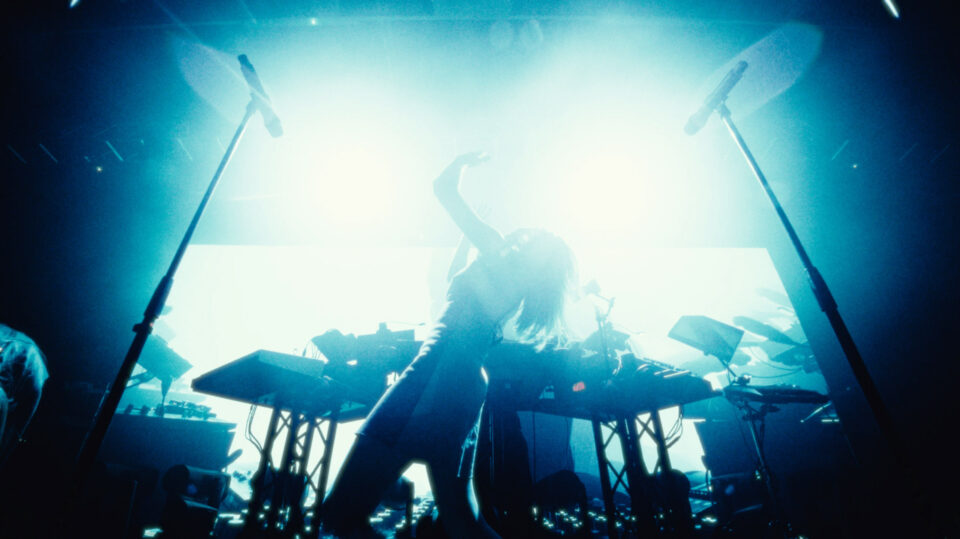
TOMORA at EartH Hall in London on March 26, 2026 / photo by Dan Lowe
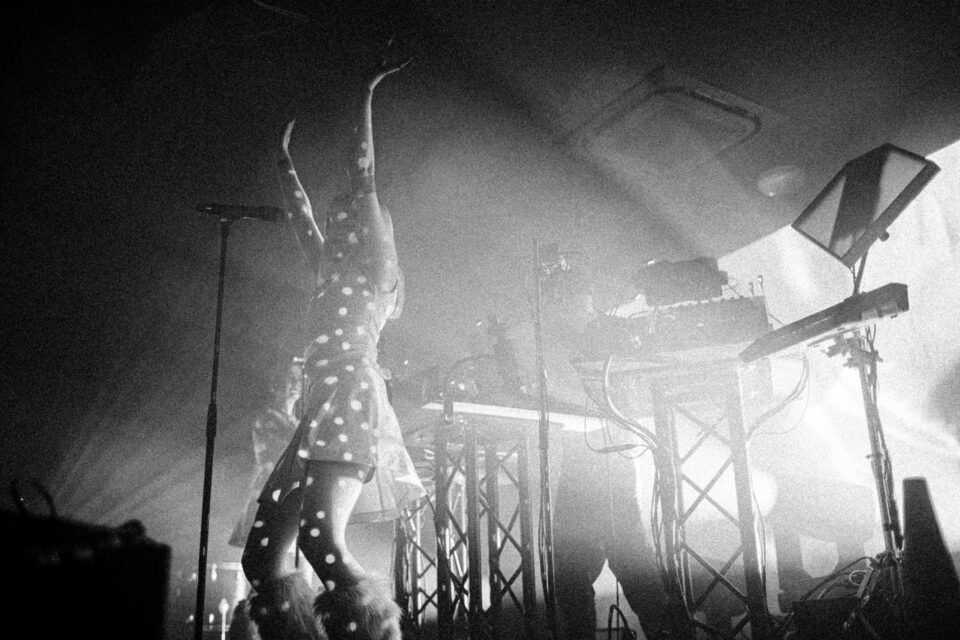
“I’d never done that before,” Smith admits. “But I didn’t want to do just live cameras. I wanted them to be slightly distorted so they almost looked like they’ve been visually put through the same process that the music has been through. They both wanted it to be a ‘band,’ because they jam in the studio and they wanted to bring that on stage and show the audience how much fun they’re having doing that. We wanted the cameras to show them enjoying themselves.”
Smith has the vantage point of having performed alongside Rowlands as an “illegitimate Chemical Brother” for a year when he stood in for Ed Simons on tour. “Tom’s a performer, but not for anyone else other than himself,” he says. “What he does is very animated and wonderful, but you never get to see that at the Chemicals show because that’s not what we’re doing there. When he’s doing what he loves doing, he’s not even aware of the cameras. He’s so present and in-the-moment and in-the-music. With TOMORA, it was fun to be able to see that. I love that image of big Tom on the screen and little Tom in real life and playing with that.“
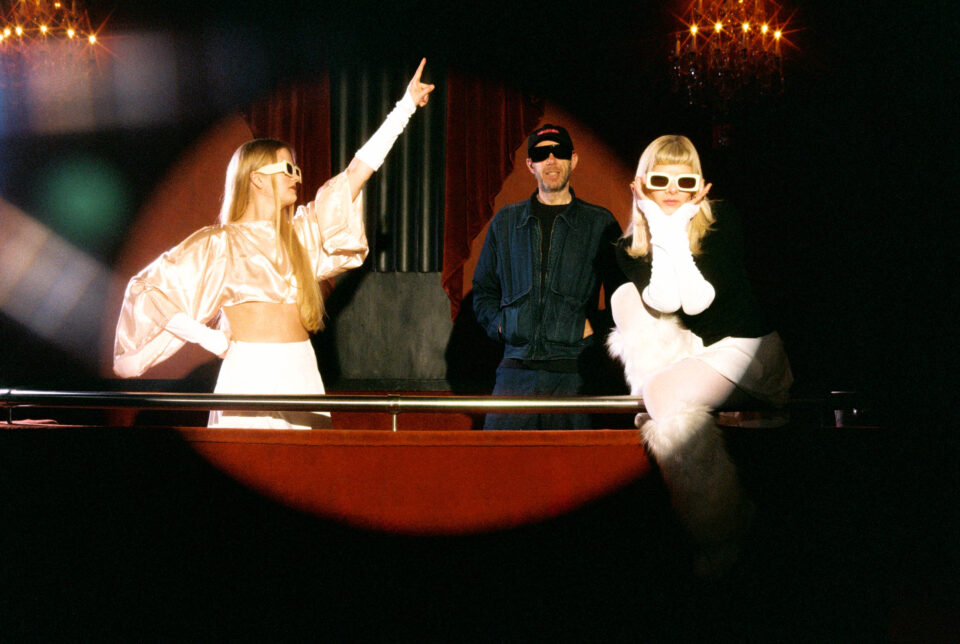
“Nothing is going to disappear just because something else arrives unannounced into our lives. They can all coexist... We’re good at listening to each other. We remain curious and on-the-hunt.” — AURORA
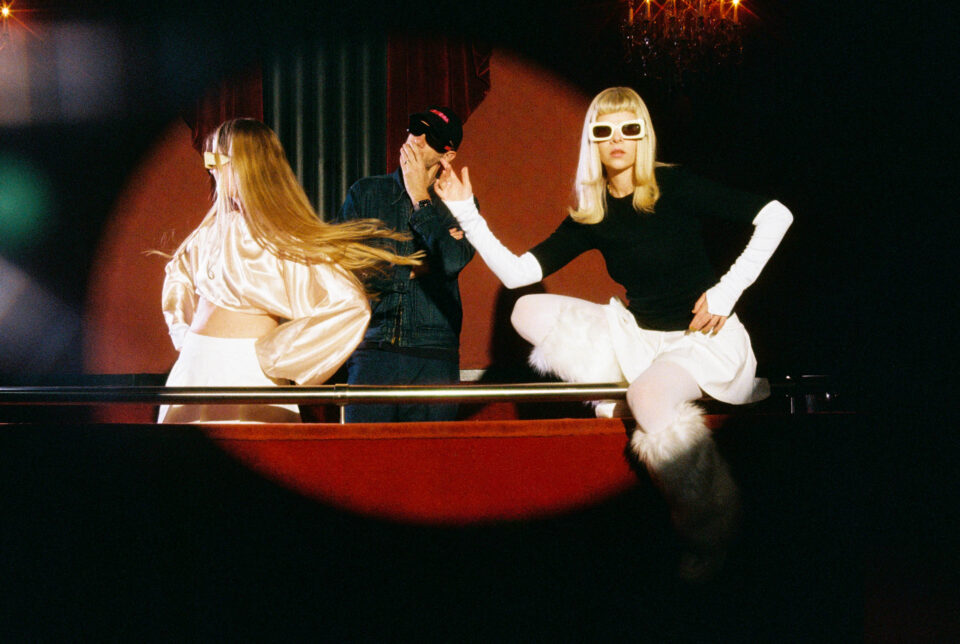
With the benefit of also working with AURORA—who Smith calls “incredible” and “a brilliant dancer and actress”—Smith could lean into theatrical moments. He brought in another Chemical Brothers collaborator, Gecko Theatre’s Amit Lahav, to direct and choreograph AURORA and Kleive’s movements. They broke up the performance into three acts to formulate a story among themselves—even if the audience isn’t aware of it. They incorporated megaphones and drums and Kleive carrying AURORA, among other standout moments that leave a lasting impression. “There was a danger of [the show] being a live PA with two girls dancing around,” says Smith. “We wanted to make it much more intentional and much more unusual and visually arresting for the audience.”
“It’s childlike and theatrical,” says AURORA, summing up the show accurately. “But I’m very calm about these things. We know what to do.” Considering it’s usually Rowlands who has to be the calm one, it’s nice to have AURORA take on the responsibility. “I’m here to serve,” she says.
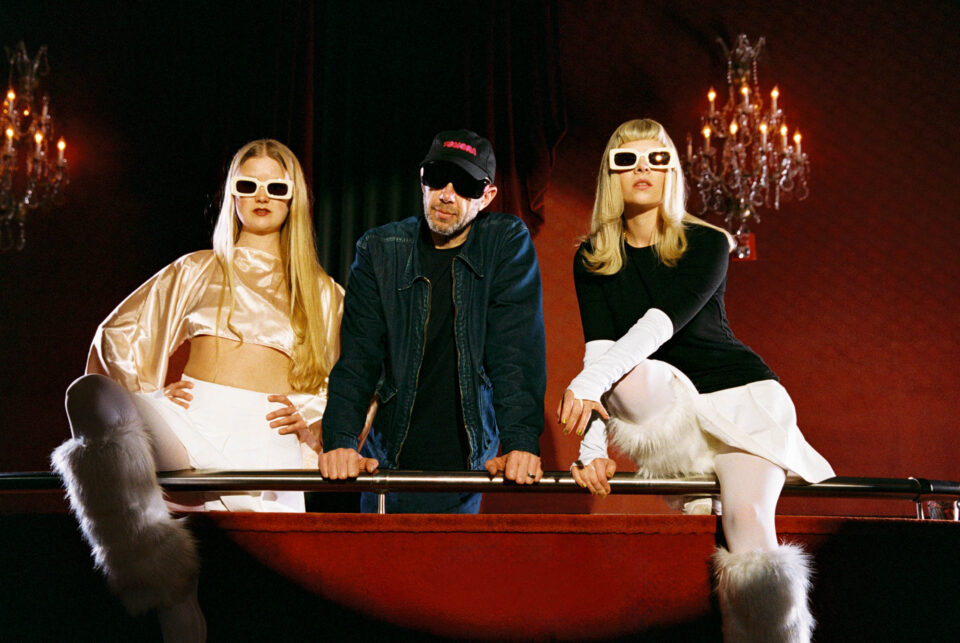
“AURORA's got something really magical about her,” observes Smith. “Aside from being hugely talented and a brilliant spirit, she empowers you. There’s a nice exchange that happens between older people and younger people, where both are bringing something really interesting. You bring in wisdom and experience, and they’re bringing energy and insight. She’s really fucking smart, but there’s something different about being 30 and being 55. You only know that when you’re 55. You take risks when you’re 30 that you wouldn’t when you’re 55. The younger person can give the older person permission to take those risks. I’m not speaking for Tom, I’m speaking from my own experience of working with AURORA on her show. I’ve learned so much from her.”
“There’s no ego in TOMORA,” AURORA concludes. “We do whatever the music tells us without words. It’s easy for us to understand. But it’s also very interesting to witness the world who knows us both as different things and by different names, adapt. It’s a good thing—and it’s just for now.” FL
