
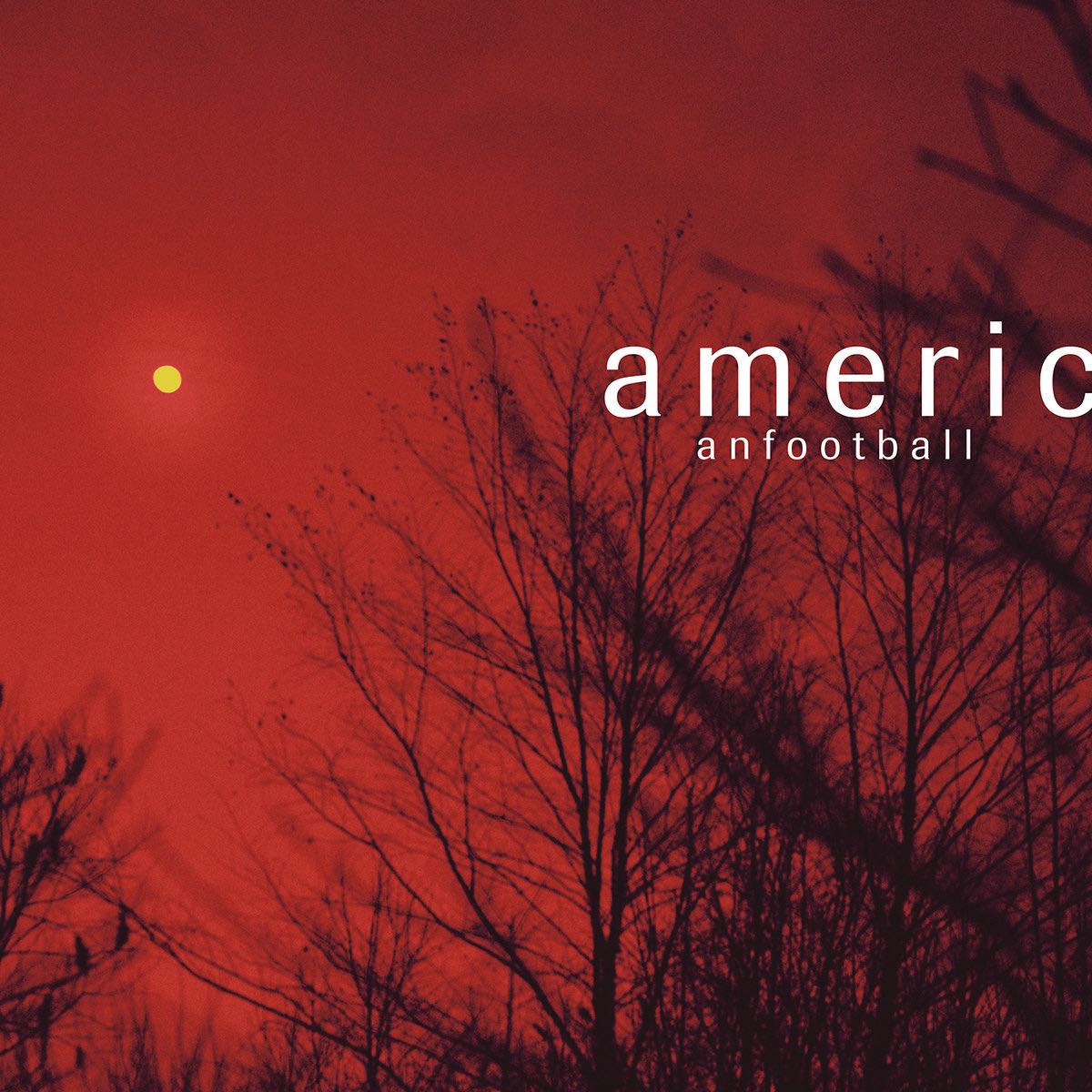


American Football
American Football (LP4)
POLYVINYL
There’s always been an undercurrent of melancholy to American Football’s music. Even 1999’s iconic self-titled debut—made when the Urbana-formed trio of Mike Kinsella, Steve Holmes, and Steve Lamos were in their early twenties—was imbued with a profound sense of longing and nostalgia. Largely responsible for helping to define the quintessential Midwest emo sound, its nine beautiful, lilting songs forever felt like the end of something, be it a relationship, the summer, youth, or all of the above. And to some extent, it was: The band broke up the year after that debut was released and didn’t reconvene until 2014. There were other projects in the meantime, of course, but there was something about that album that didn’t let go. It grew in influence and status that spread way beyond its genre—indeed, when it was reissued for its 25th anniversary in 2024, there was an accompanying covers record that saw artists as diverse as Ethel Cain, Iron & Wine, Manchester Orchestra, and Tortoise’s John McEntire recreate its songs in their own sonic image.
It would’ve been incredibly easy, then, for American Football (augmented permanently to a four-piece since their reunion with the addition of Kinsella’s cousin, Nate) to have rested on those laurels and remade that album again and again. Except for continuing to self-title each record since—one in 2016, one in 2019, and now this, their fourth—they’ve done anything but. Little by little, they’ve expanded the majesty and swell of their sound, while also inviting others to become part of it. Their eager willingness to do so demonstrates just how widespread the band’s reach has become. While LP3 featured cameos from Parmore’s Hayley Williams, Slowdive’s Rachel Goswell, and Land of Talk’s Elizabeth Powell, this one features Rainer Maria’s Caithlin De Marrais, Wisp, and Turnstile’s Brendan Yates. The latter appears on second track “No Feeling,” a melodically light song that’s lyrically shot through with suicidal ideation. No longer, you see, is the melancholy contained to the undercurrent of these songs.
Rather, these 10 tracks flow with a heavy darkness, a maudlin morbidity, a very palpable sense of emotional damage and distress. Much of that was inspired by Mike Kinsella’s divorce, but even beyond that, songs like “Blood on My Blood” and “Bad Moons” are riddled with existential doubts and self-recrimination. It makes for a record that essentially serves as one long, dark night of the soul—broken and self-flagellating, abjectly and softly sad—that drifts in and out of trauma and tragedy while trying to come to terms with it all. And yet, through the music—more widescreen, textured, and layered than ever before—there’s now a faint sense of hope to be found in the undercurrent, especially in the gorgeous strains of “Wake Her Up” and, despite its title, the lilting caress of closer “No Soul to Save.”
Ironically, that last song is full of redemption as it professes a lack thereof. It’s a transcendental, stirring end that—as each album since that debut has also demonstrated—shows that American Football just keep getting better with age. Their trademark sound remains, but it’s more hidden now, more subtle. In some ways, it feels like the band is just getting started. But this record is proof that it’s possible to not just build on a powerful legacy, but to nurture it, to pay homage to the past while also forging confidently into the future.
