

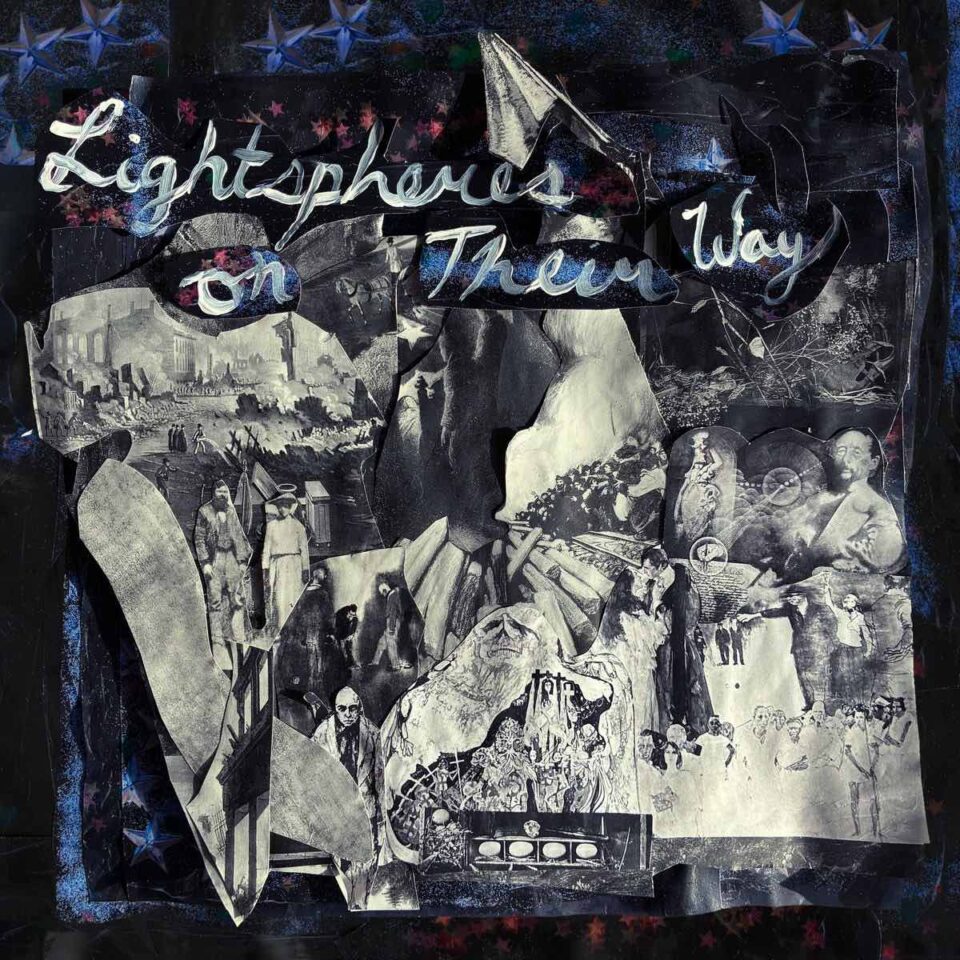
On a muggy evening near Sunset Boulevard’s Silverlake Lounge, Robbie Chater and Tony Di Blasi are figuring out the final details for their night’s busy work: a pop-up event in honor of their newest electro-epic as The Avalanches, No Bad Memories. Complete with a vending machine selling real cans of their fictional Takumi Digital Archives brand’s Eldorado soda, the multisensory panorama adds a new dimension to the record’s dramatic schematic of dissecting advertising jingles, FX, prompts, and images from their youth. From everyone’s youth, be they American or Australian.
It’s a collective vibe greatly in tune with an aesthetic that reaches across all of The Avalanches’ work: the sentiment and sediment of nostalgia made real through the pair’s famous wealth of danceable sampling, a plunderphonic euphonia designed to connect us all to each other—bad memories or good, consciously or not. “You’d be surprised how many of your product ads we had on our television as kids,” says Di Blasi of the remarkable similarity between their shared youths in Melbourne versus my upbringing along the East Coast of the United States. “Growing up in Australia, so much of our advertising was from America.”
“It’s just re-branded with an Australian accent,” Chater chimes in.
“I so remember the omnipresence of Coca-Cola ads,” says Di Blasi. “The songs were ever-present, as were the big production values of the ads themselves. They were all very Hollywood.”
“Everyone we collaborated with for this album, as soon as we spoke about the ideas for the record and the jingles of their childhood, each turned to the times when they were five years old and they began singing their favorite cereal or soda commercial,” states Chater. “Those songs took them right back there. There’s this piece of music that you think you’ve forgotten, and then, all of a sudden, you’re transported. That’s so, so powerful. They stick with us, even if you’d think we’d forgotten.”
“That’s the intent of the ad in the first place,” Di Blasi says, “to get into your brain to make you buy that product. Even all those years later.”
Shared pasts and Manchurian candidates aside, there’s no timeframe as to when The Avalanches’ two main men—adding Midnight Juggernauts’ Andy Szekeres to the lineup this time around—actually began thinking about what they call the “simultaneously magical and insidious ways that advertising and name-brand technology wraps itself around our memories.” As Di Blasi makes clear, the twosome “never actually stop making music,” despite the gaps in time between 2000’s Since I Left You, 2016’s Wildflower, 2020’s We Will Always Love You, and No Bad Memories.
“We just find a moment where we have to cut it all off and call it a record,” says Chater with a laugh in consideration of the last two years of intense work required to close out the No Bad Memories process and its storyline involving the fictitious Takumi Digital Archives company. “Besides, as sample-based musicians, memory is always a big part of everything we do. We consider the life of the recording before we found it, so this was just a further interrogation of our place in the world, our memories, and how what we consume affects our identity.”

“We’re always trying to find our place in the world, understanding it, so there’s introspection here. But I also think No Bad Memories is filled with uptempo party songs and crazy sounds.” — Tony Di Blasi

Making TDA real—or at least vividly realistic—certainly fucked with its users’ sense of identity as the video presentations on its website feature an overly earnest Haley Joel Osment provoking visitors to upload their personal memories into the archives without cluing viewers in to the canard. It also posted blurbs from other faux advertisements and media, including phony Wired mag features (“Ads Implant False Memories”) and psychological essays (“Make My Memory: How Advertising Can Change Our Memories of the Past”). For my money, The Avalanches’ wonky, hyper-real world-building could potentially cause the type of panic that War of the Worlds did decades ago in falsely proclaiming via real-time broadcast that an attack from Mars was well upon us. “I think some people did believe what we were doing was real,” says Di Blasi. “But we love diving all the way into the creative process and seeing what happens.”
Aiding in making the unreal too real is the record’s cast of musicians and actors—some of whom were sampled (such as the reclusive Carly Simon for “One More Fantasy"), some of whom were there in-person (Panda Bear, Karen O, Rivers Cuomo), yet all of whom become a textu-aural fabric designed to run through The Avalanches’ usual fuzzy collage-tapestry. The interstitial advertising bits featuring Osment and Mike Patton are great fun, too. Chater speaks up on the former’s behalf as to his fully understanding the project and being generous with his time. “He was so supportive with his input and humor. That short film shoot was cold and long, but we really appreciated everyone who got involved.”
Pairing with historically important electronic-music avatars and advertising-jingle giants Suzanne Ciani and Haruomi Hosono was also the clever, rich, top-shelf whipped creme upon a very complexly layered cake and continuum. “You’re so right; it is a continuum, and one that so informs what we do,” states Di Blasi. “And both of them are fantastic musicians in their own right. Yellow Magic Orchestra and Hosono are giants in the Japanese jingle market. And Ciani? She’s made logo sounds for Atari and Energizer, as well as for Coca-Cola. That sound of a bottle popping, opening, and pouring that she did on a modular synthesizer. I believe that’s still in use.”

“We consider the life of the recording before we found it, so this was just a further interrogation of our place in the world, our memories, and how what we consume affects our identity.” — Robbie Chater
Though there’s perhaps a forlorn thematic arc across the idea of advertising’s hold on our memory banks, The Avalanches still see what they do as uplifting, uproarious glee. “We’re always trying to find our place in the world, understanding it, so there’s introspection here,” says Di Blasi. “But I also think No Bad Memories is filled with uptempo party songs and crazy sounds.”
And in recounting the 25th anniversary of their debut album and its multitude (over 3,500) of separately sampled moments, I remain curious as to the amount of work put into the plunder of plunderphonics when it comes to the world of AI and easier access to our memories, musical and otherwise, on The Avalanches’ new LP. “The art of sampling—the way we do it—is much the same as when we did Since I Left You,” says Chater. “We used old Acolyte samplers and stored them all on floppy discs for our debut, all of which has limited storage amounts—a creative bottleneck, restraint but in a good way, because you can’t overthink things, and you have what you have. And the idea of chopping up samples? It’s still the same. AI exists, sure. But there’s no shortcuts. We still listen to the old records that we use all the way through so as to wait for that magic moment in the song to pop up on the B-side. That’s a very time-consuming labor of love.”
With that, The Avalanches are certainly possessed by—and possessive of—an art form that’s filled with nothing but good memories. FL
